
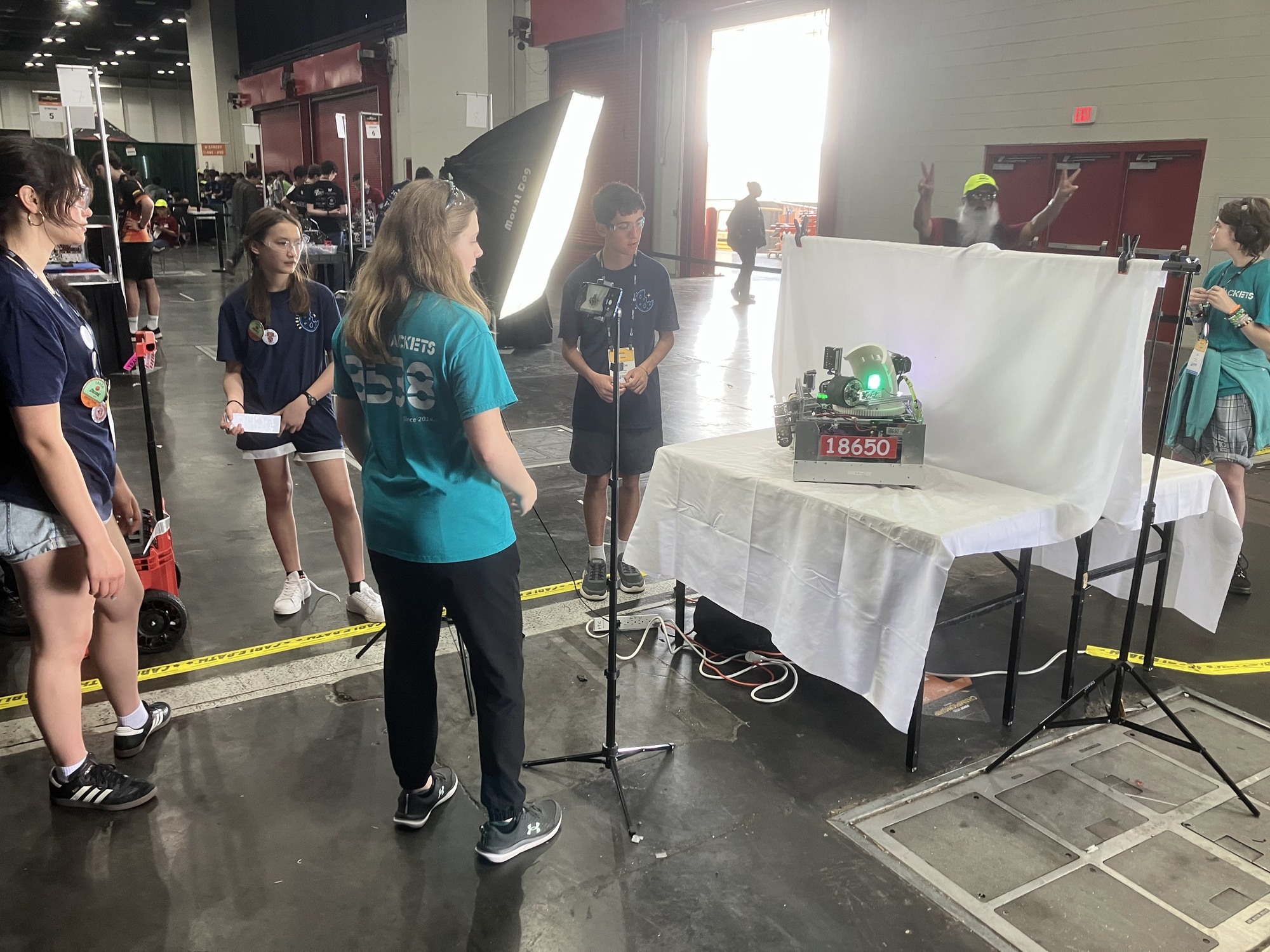
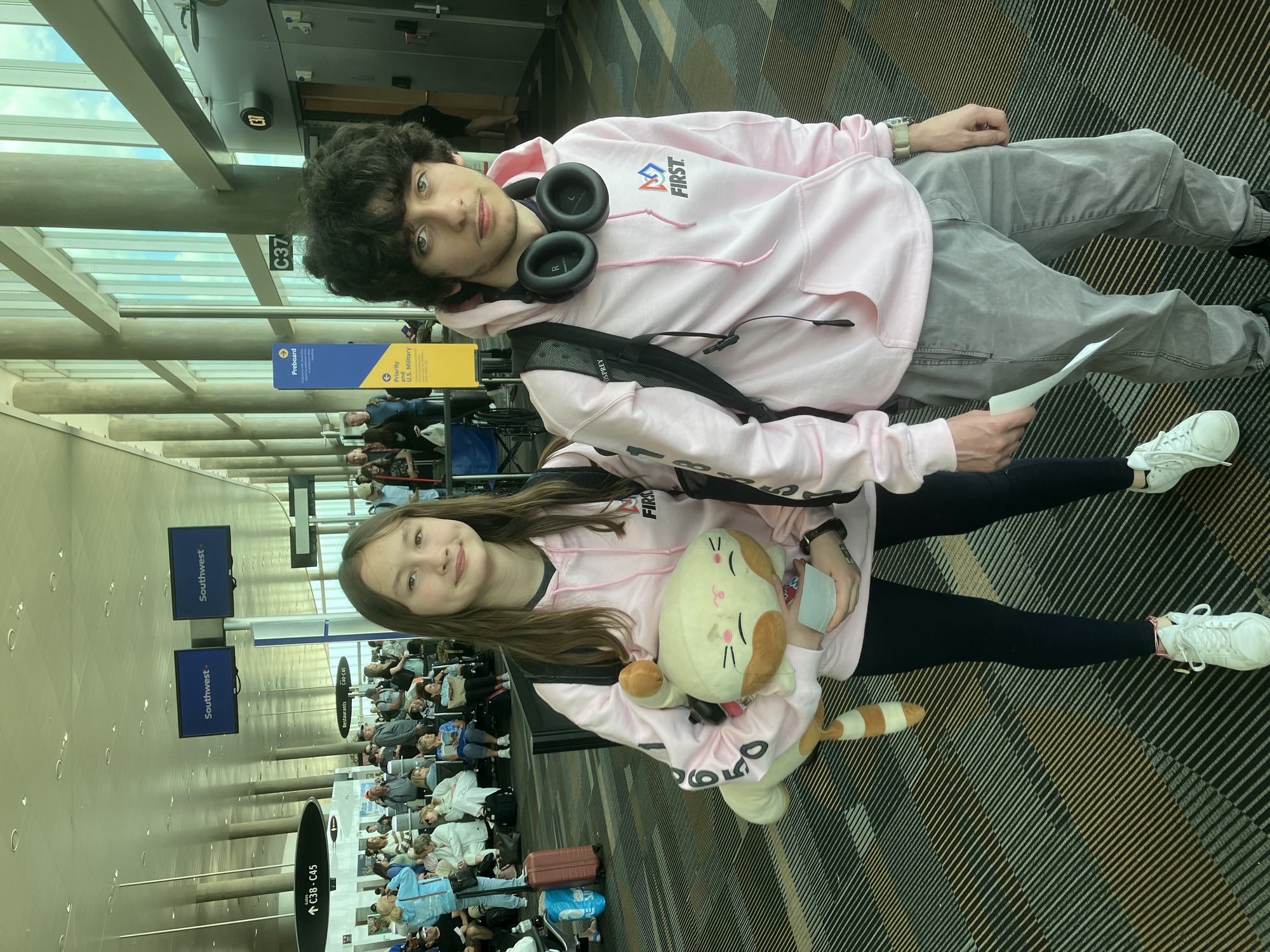
Team 18650 “Cookie Clickers” of Bennington Area Robotics attended FIRST Championship this year for the first time. FIRST Championship is the largest youth robotics event in the world. There were over 330 teams in our league alone, FIRST Tech Challenge (FTC), alongside FIRST Lego League (FLL) and FIRST Robotics Competition (FRC). We were one of two FTC teams representing Vermont, along with 8304 “Wired Cats” of Saxtons River.
Most teams at FIRST Championship are returning teams, who have won their regional championship many years running. It was unusual for both Vermont teams to be in their first year, and funding was a great challenge. Wired Cats almost didn’t make it, and I fronted the costs for Cookie Clickers while fundraising. The first year is hard!
Venue and Environs
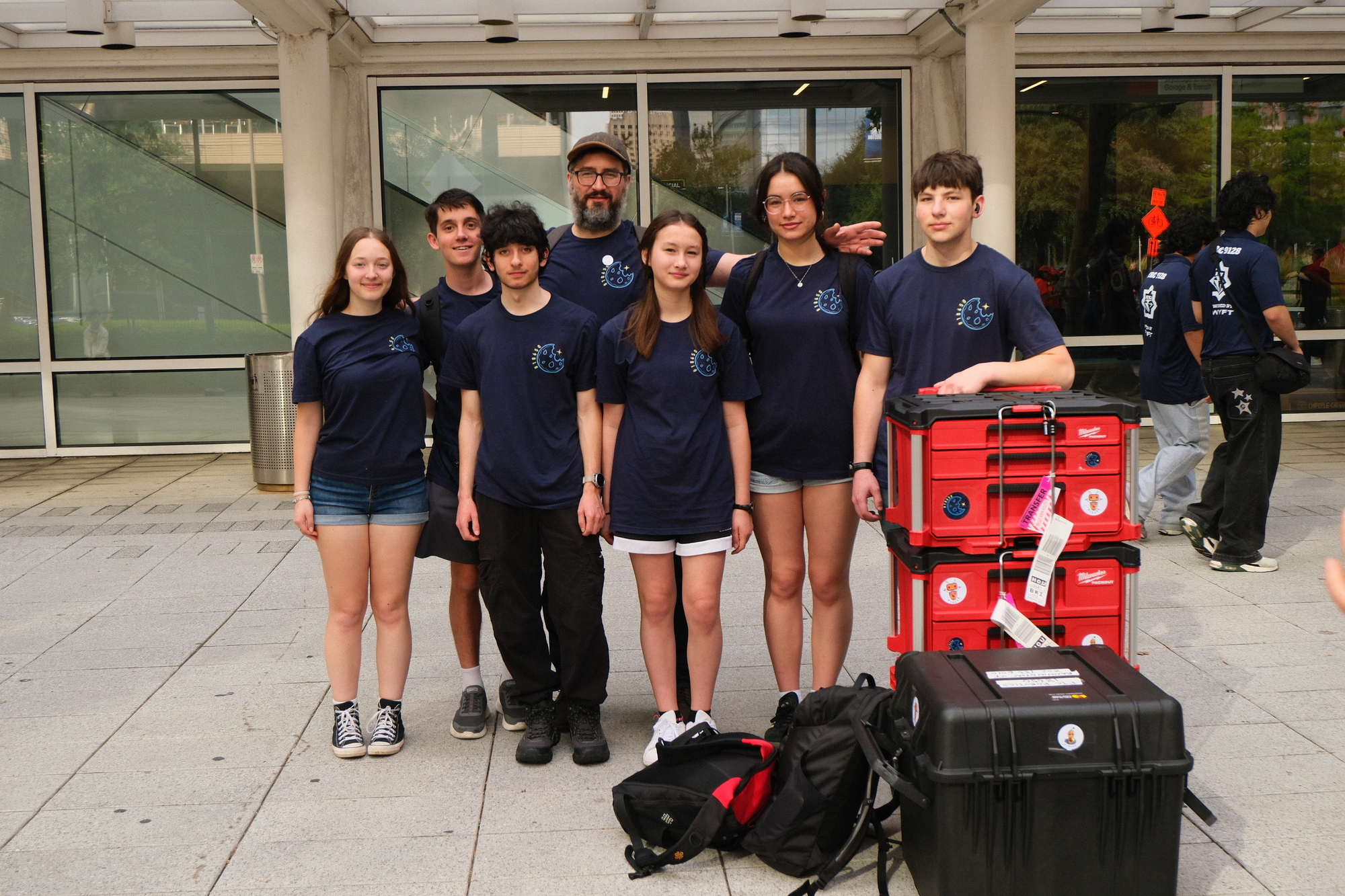
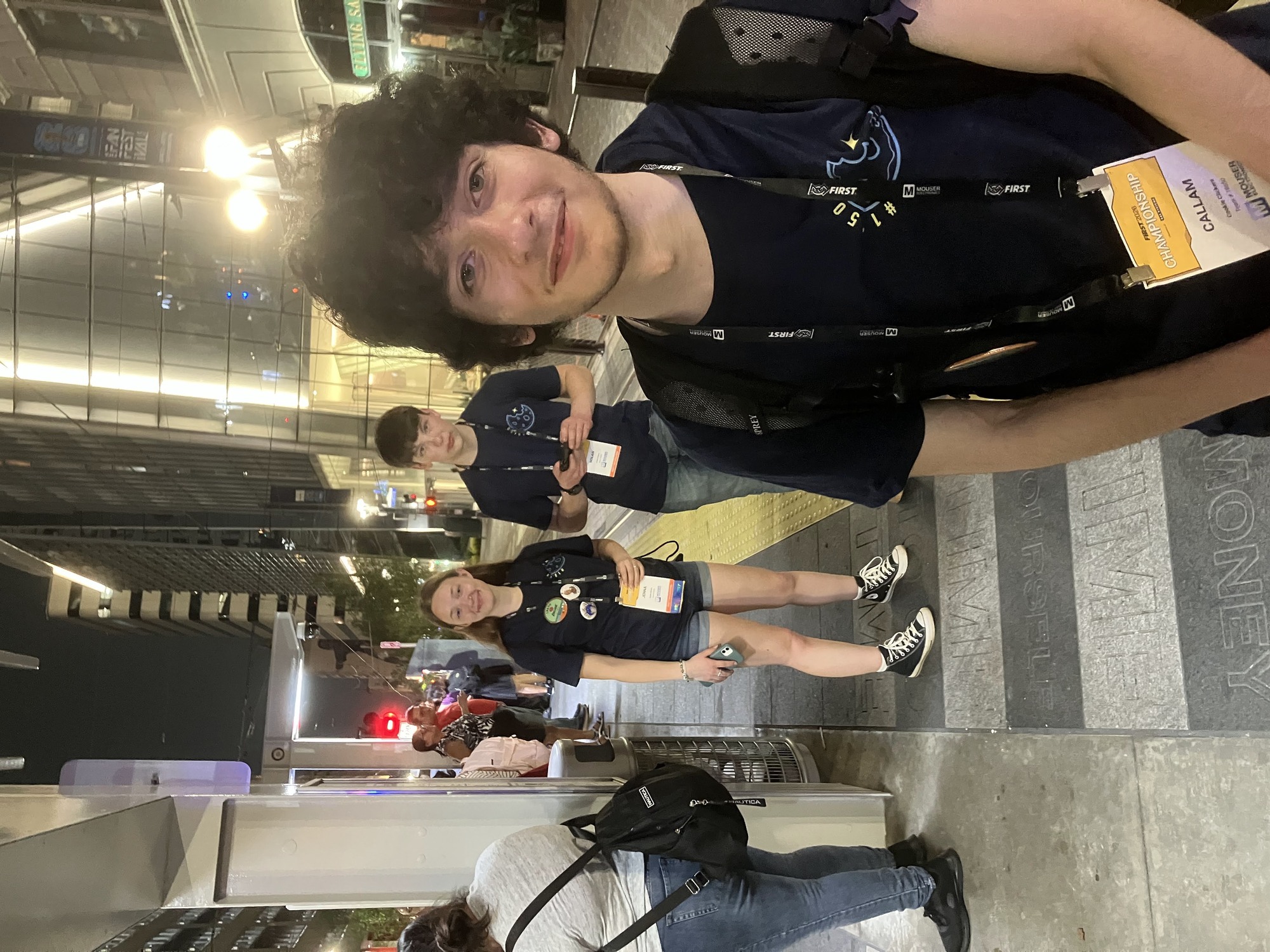
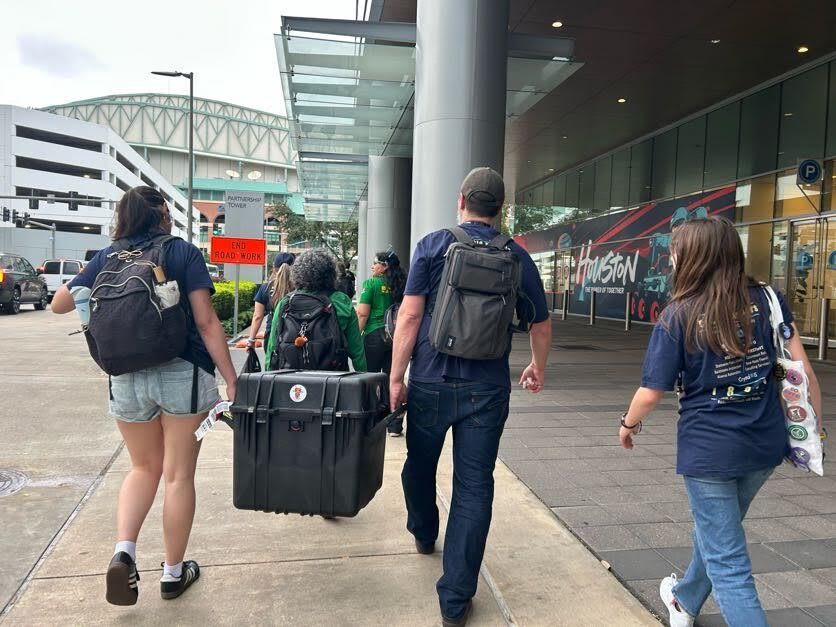
The championship was held at the George R. Brown Convention Center in downtown Houston. We stayed in the medical district near Rice University, and took the Red Line to avoid traffic and save money on ground transportation. This took us through various neighborhoods in central Houston, and gave the kids a daily view of urban life in Texas.
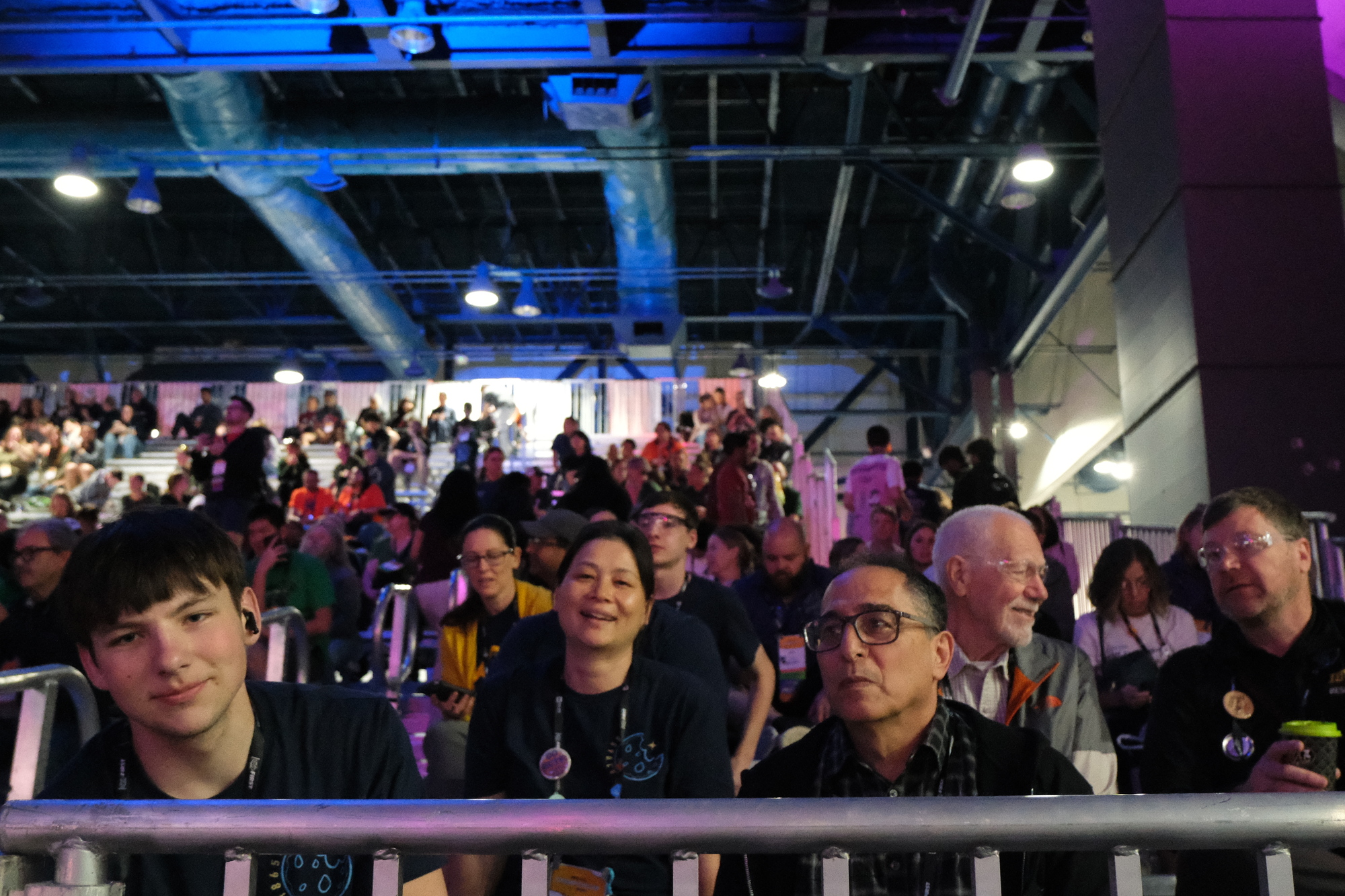
It was robotics week, and everywhere you looked there was another team in uniform. FLL teams were young and charming, FRC teams were large and jolly, and FTC teams were intense and tight-knit. Everyone was happy to be there, and excited for the competition and festivities.
Organizers claim 50,000 people and I don’t doubt it. Thankfully, all the travel and logistics went off without a hitch, and no one was ever separated from the group or lost in the crowd. Phew!
Food was a challenge, as our hotel didn’t serve breakfast, and the convention center was so large that walking anywhere took 30 minutes. We figured this out as the week went on, worked more groceries into the meal plan, and even enjoyed some Texas BBQ.
Schedule
- Day 0, Tue 4/28: Arrived in Houston at 9, checked into the hotel by midnight
- Day 1, Wed 4/29: Inspections, Practice
- Day 2, Thu 4/30: Qualifiers
- Day 3, Fri 5/01: Qualifiers
- Day 4, Sat 5/02: Playoffs, Space Center Houston
- Day 5, Sun 5/03: Return!
Inside the Convention Center
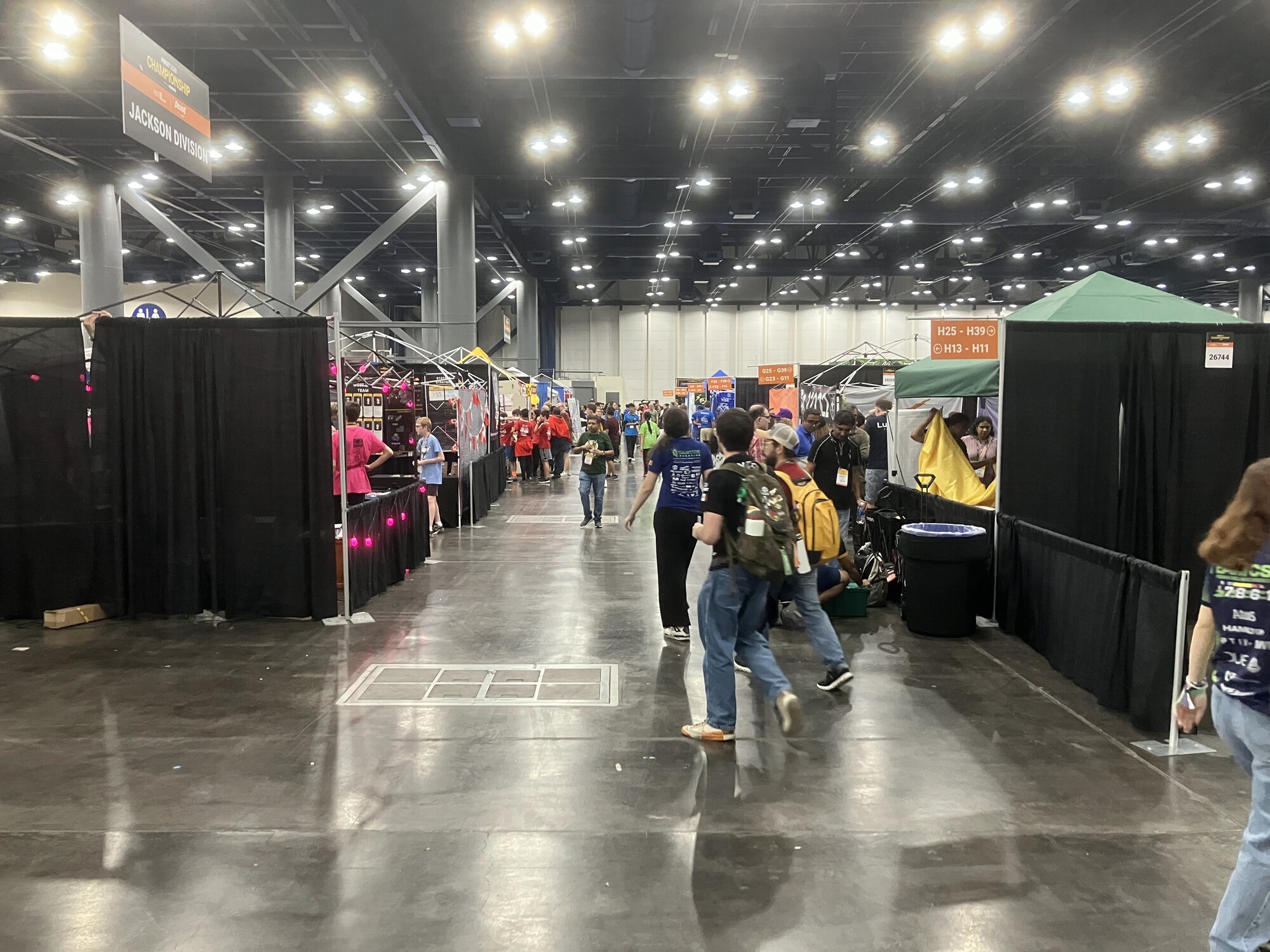
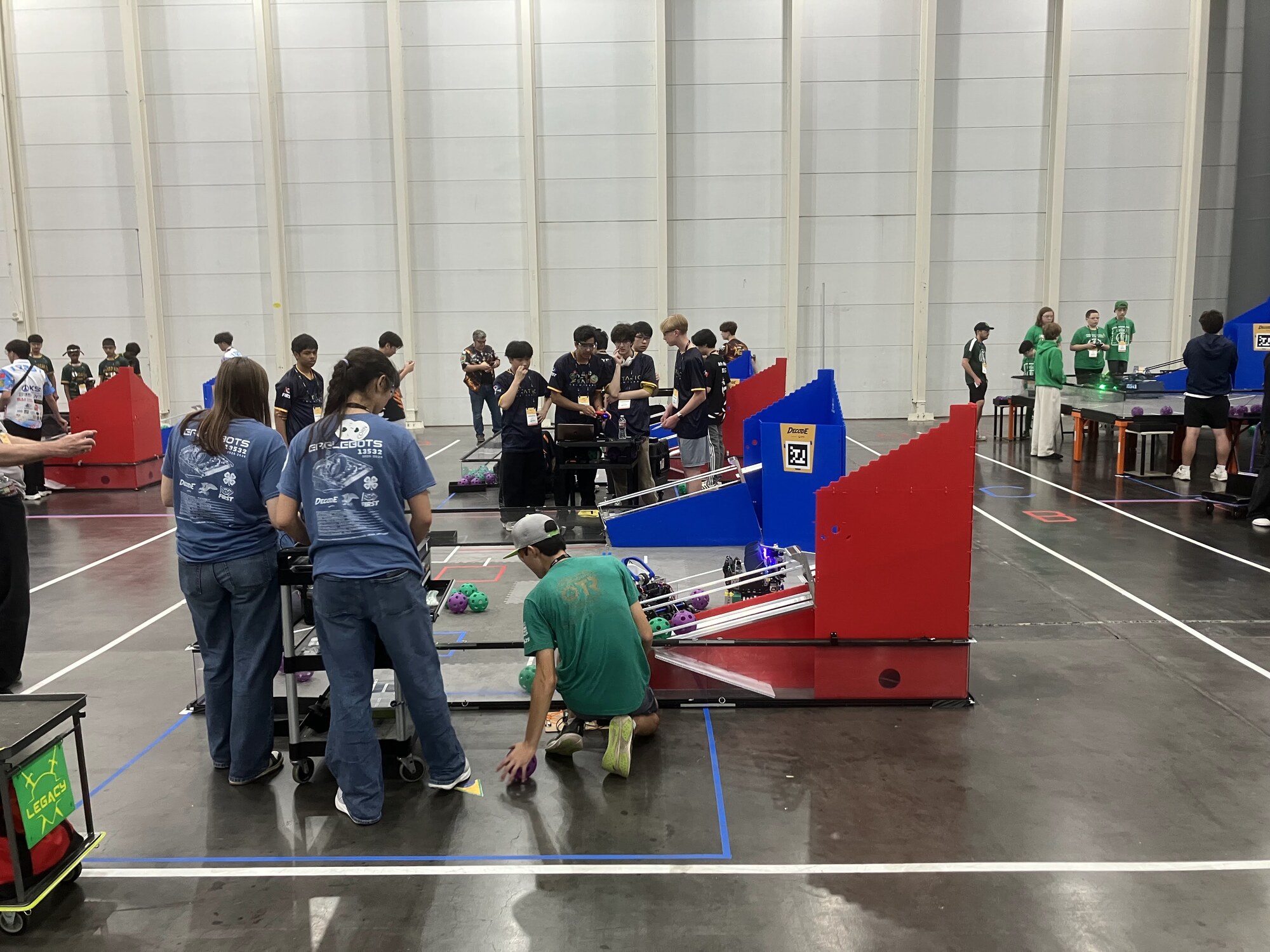
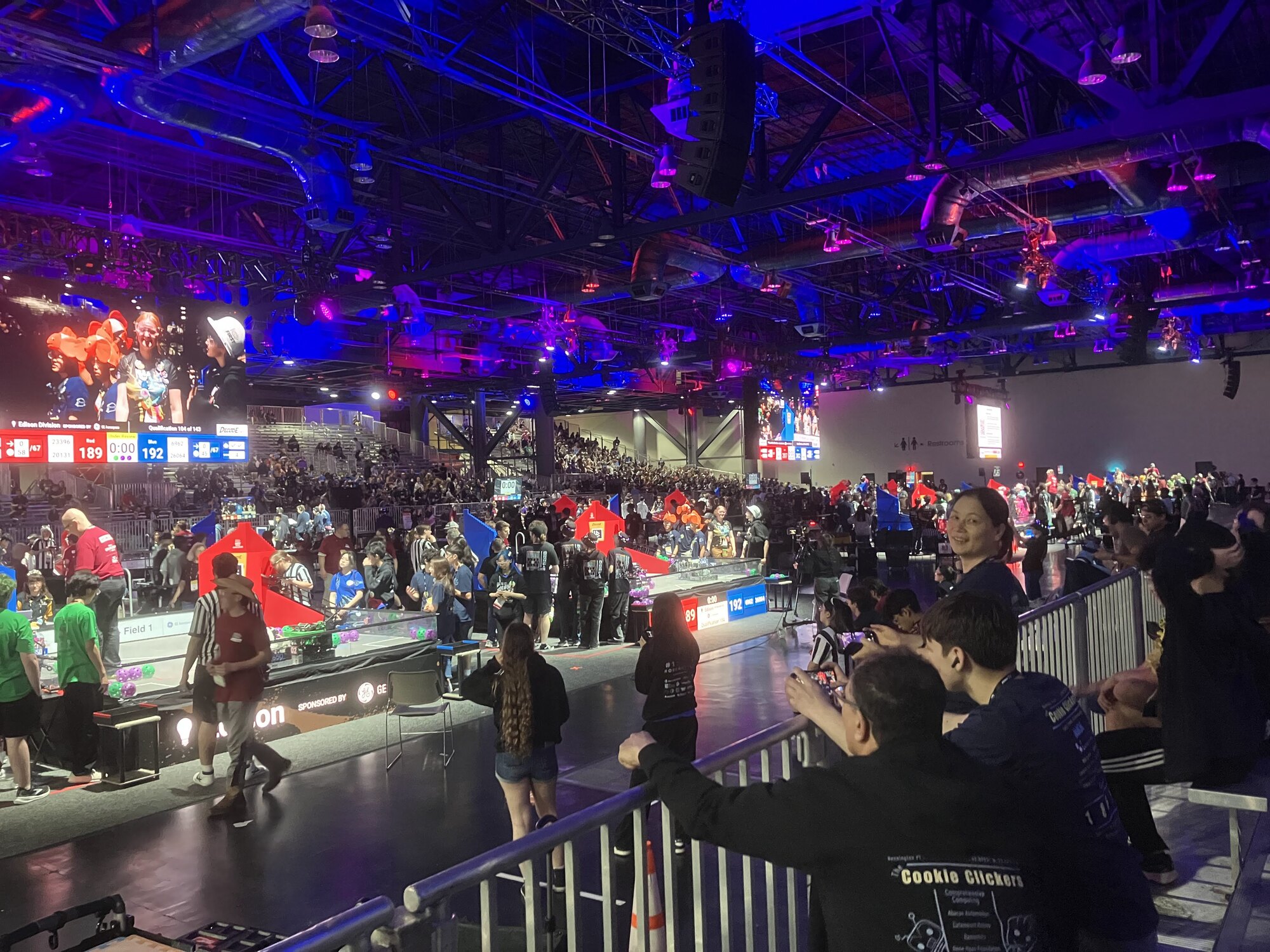
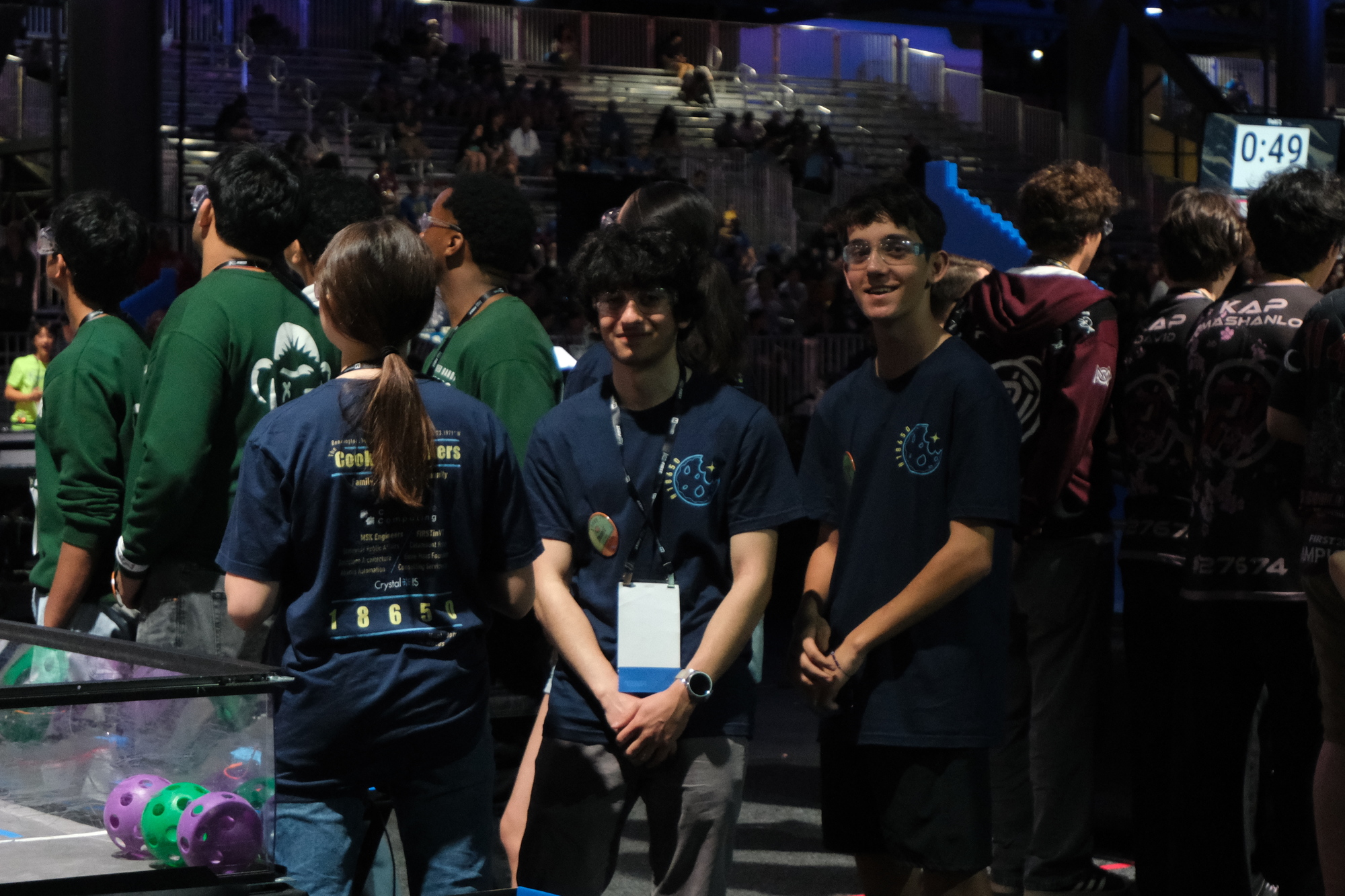
Our league was on level 3, in a large hall divided between competition fields, team pits, and practice fields.
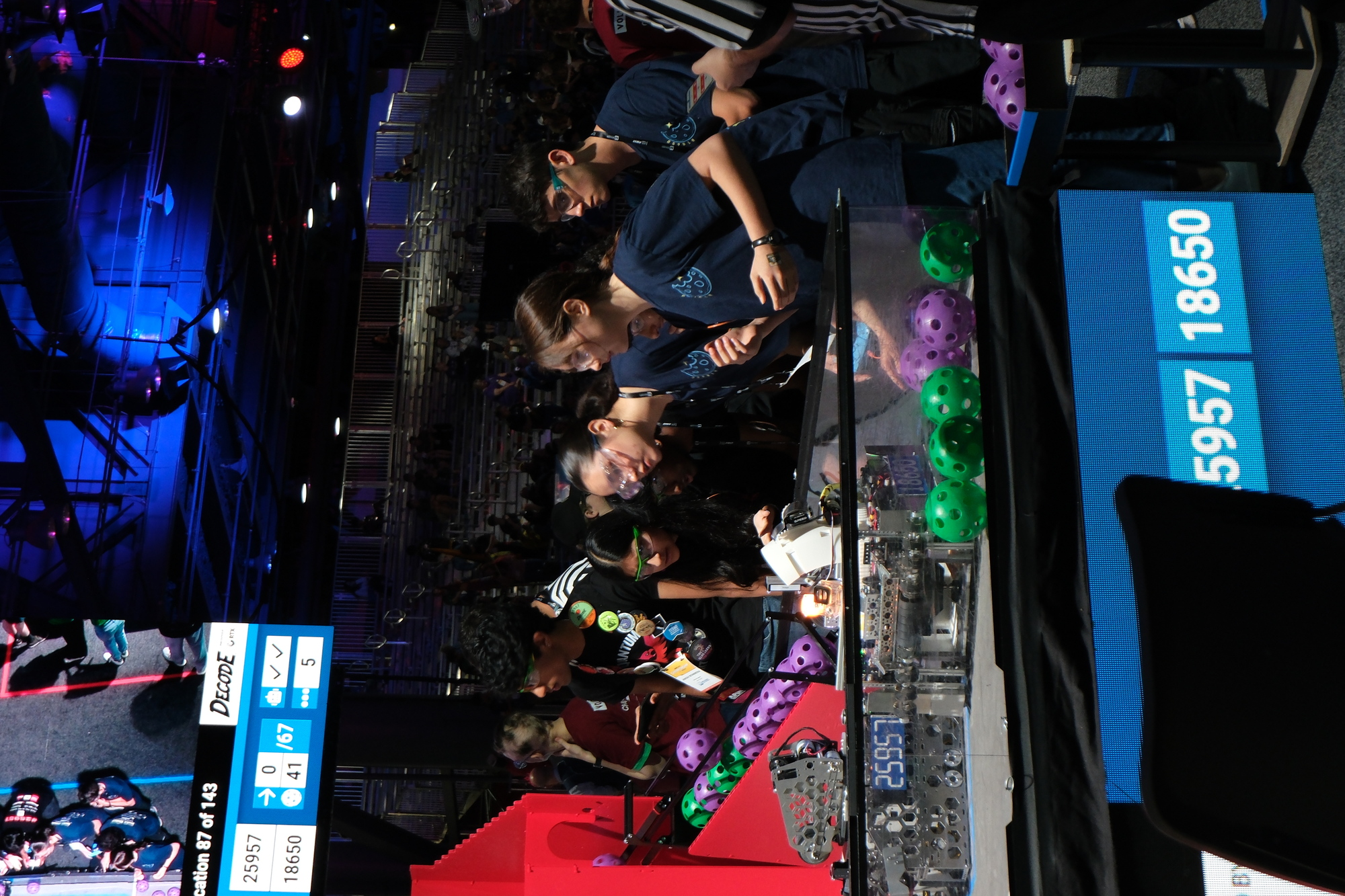
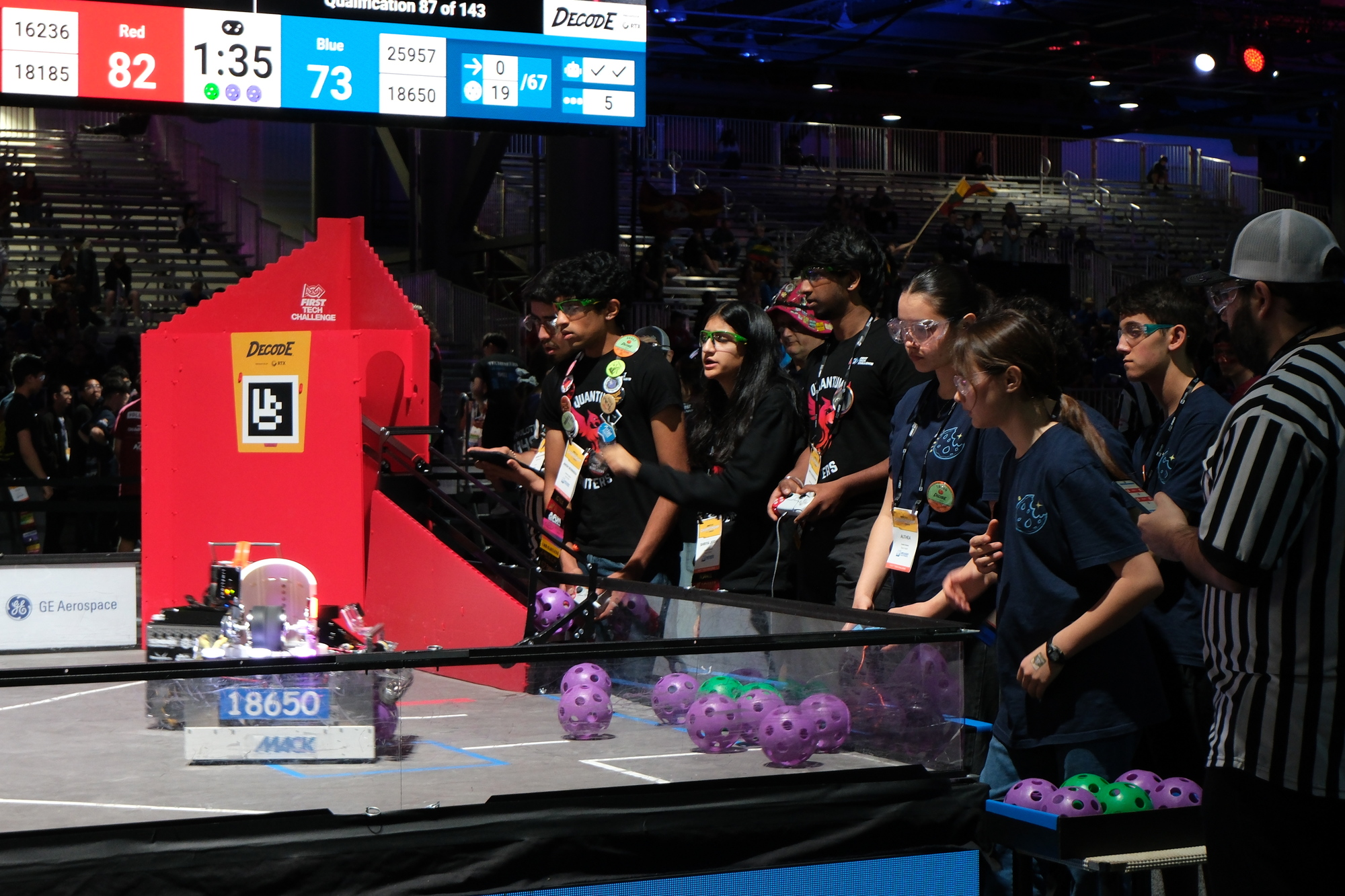
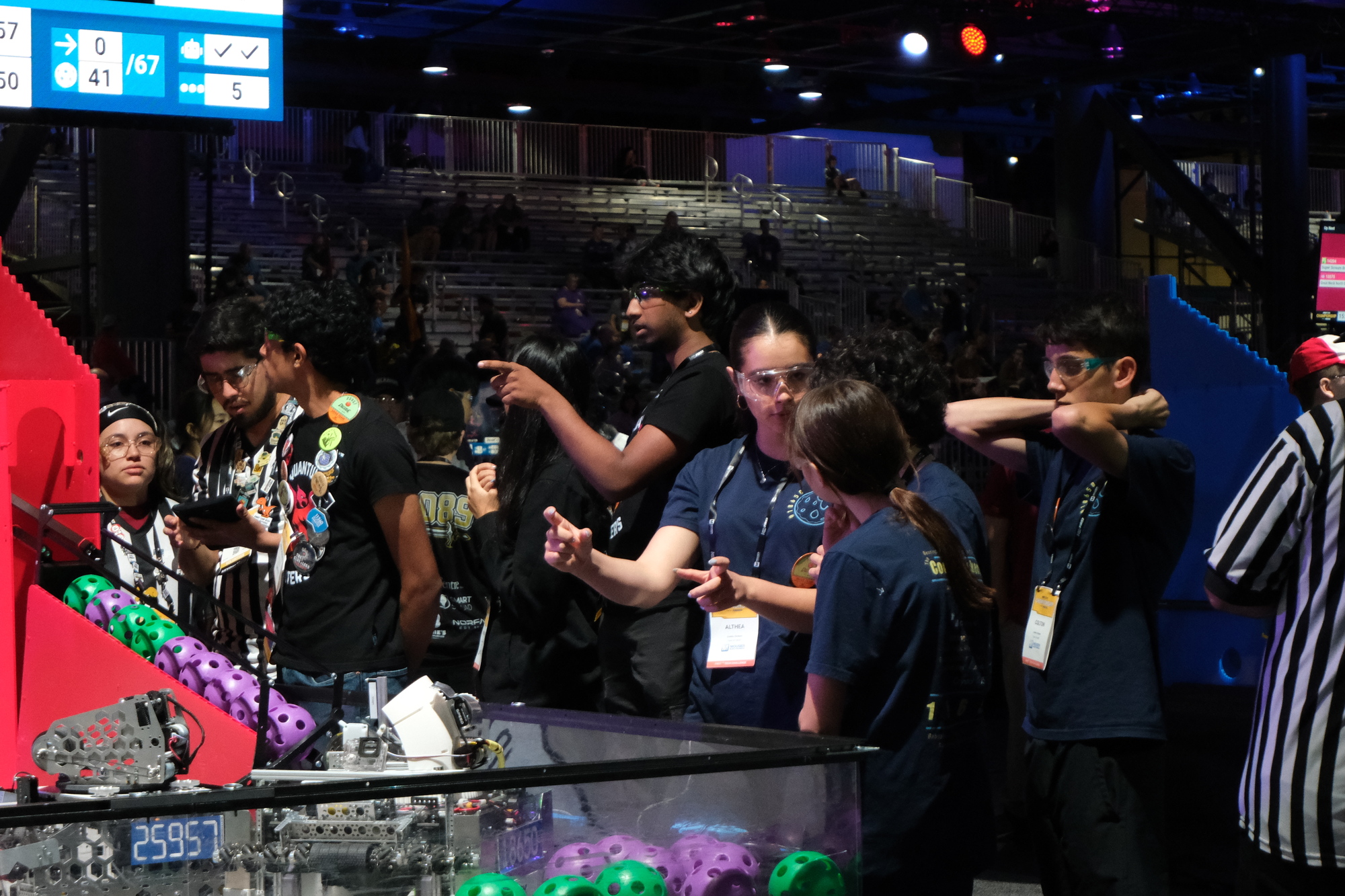
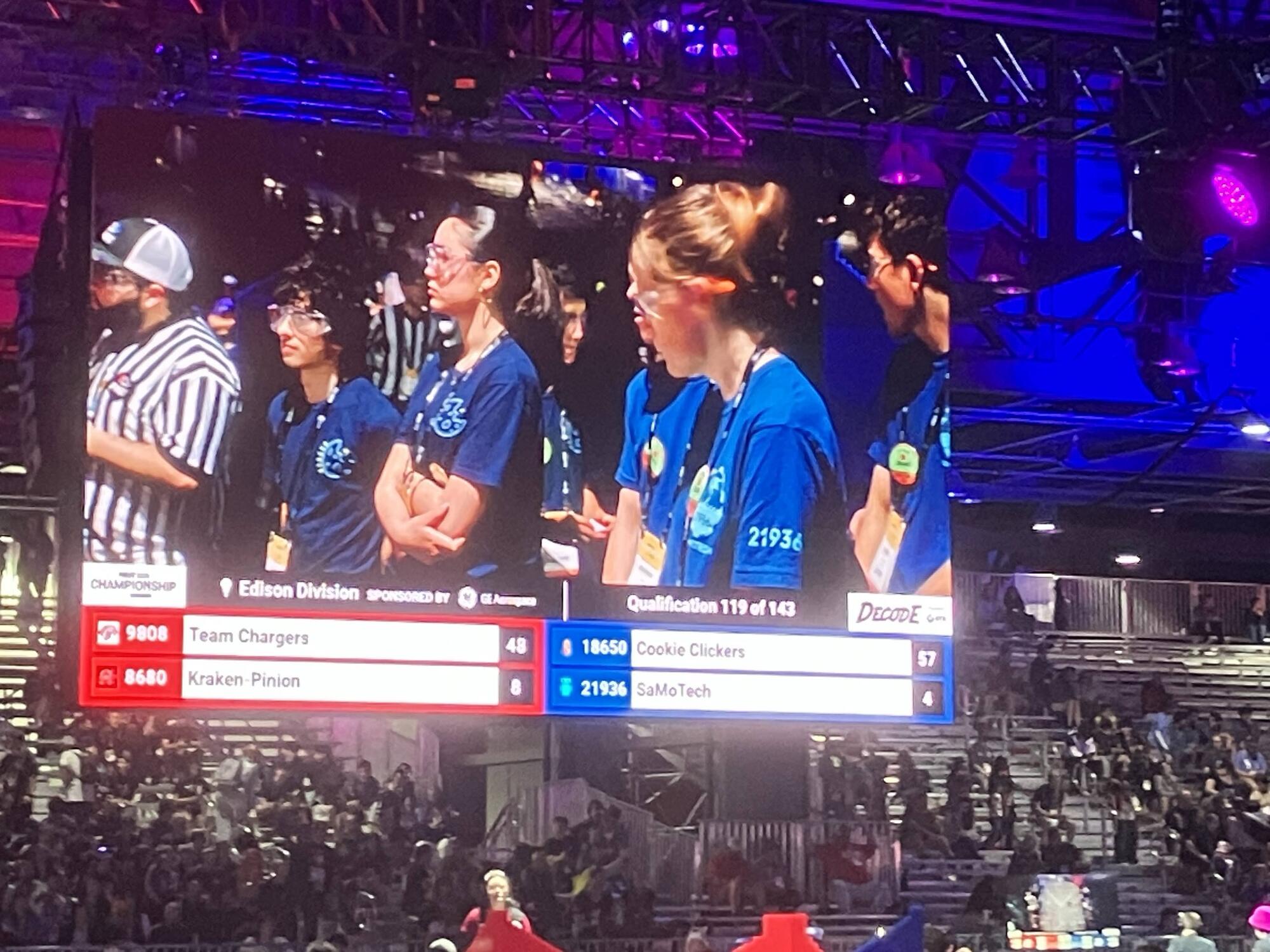
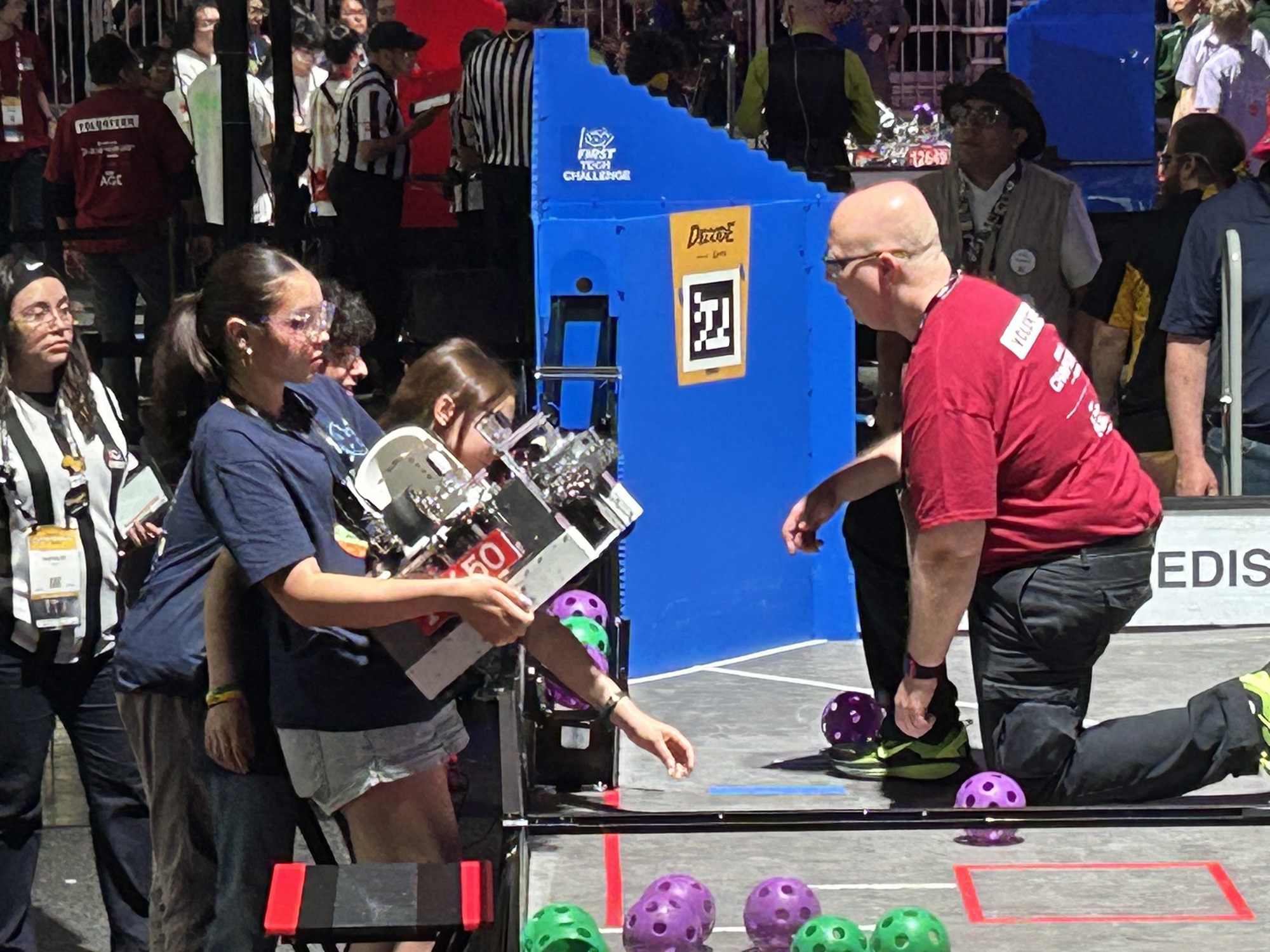
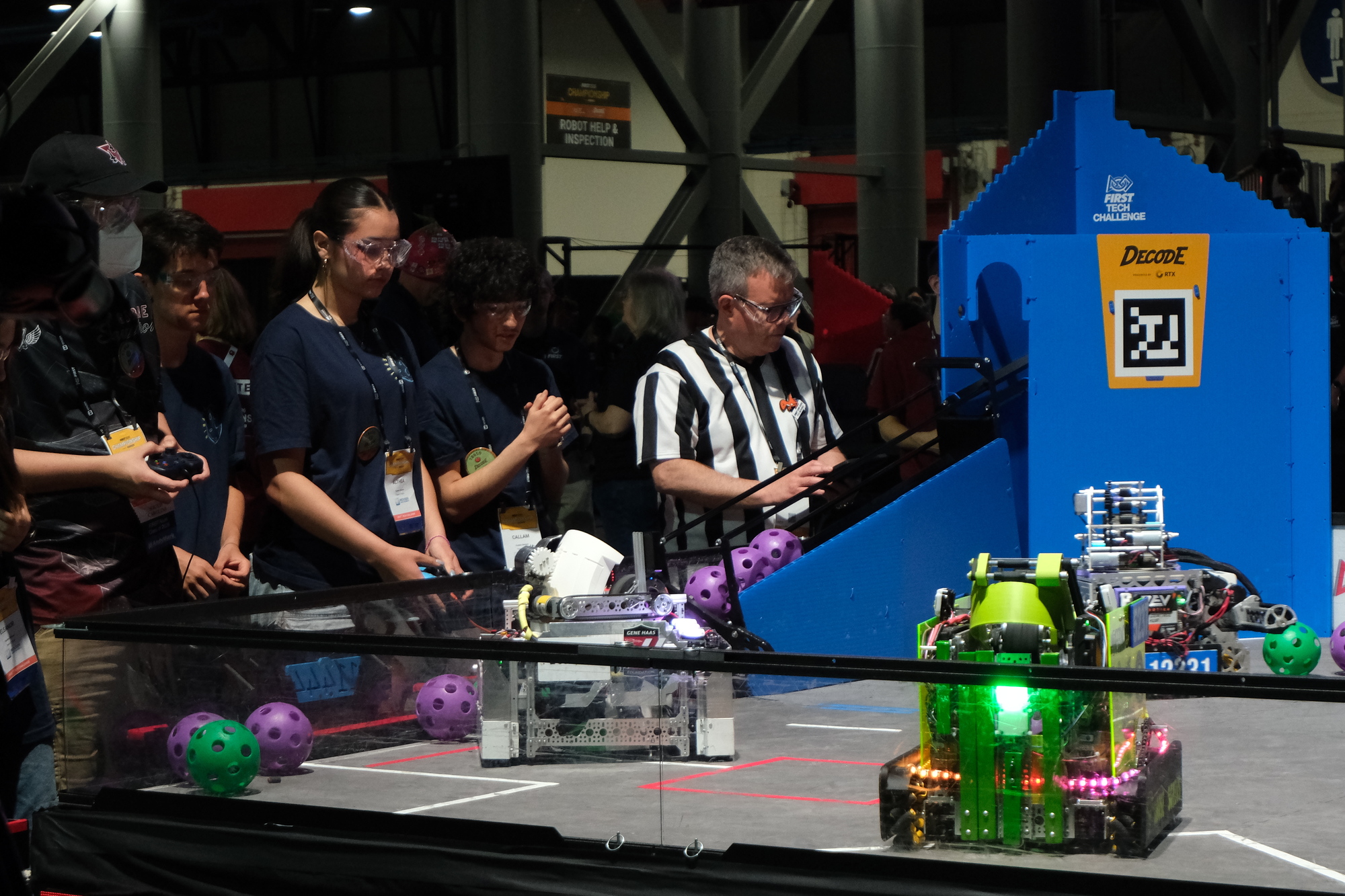
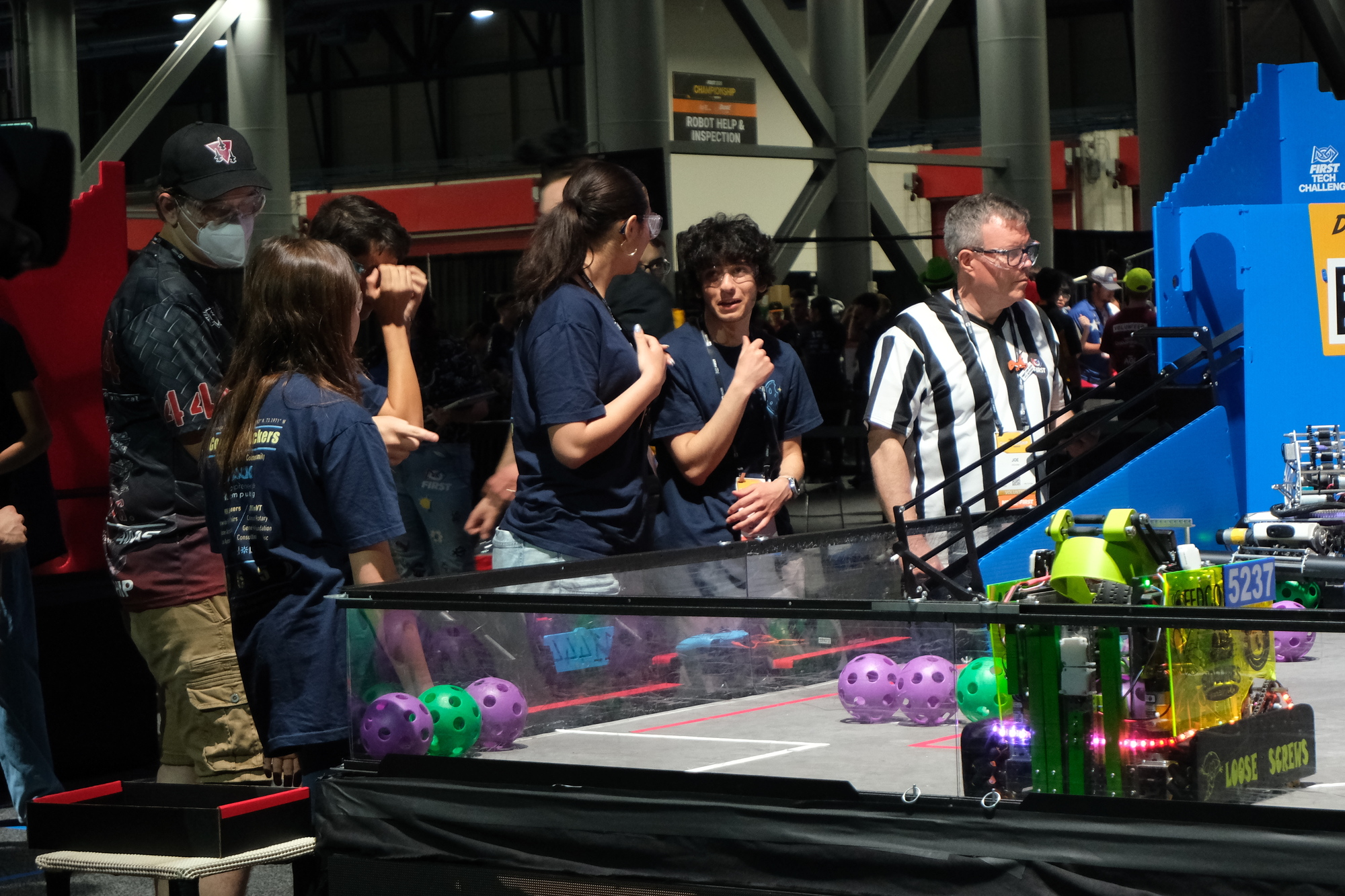
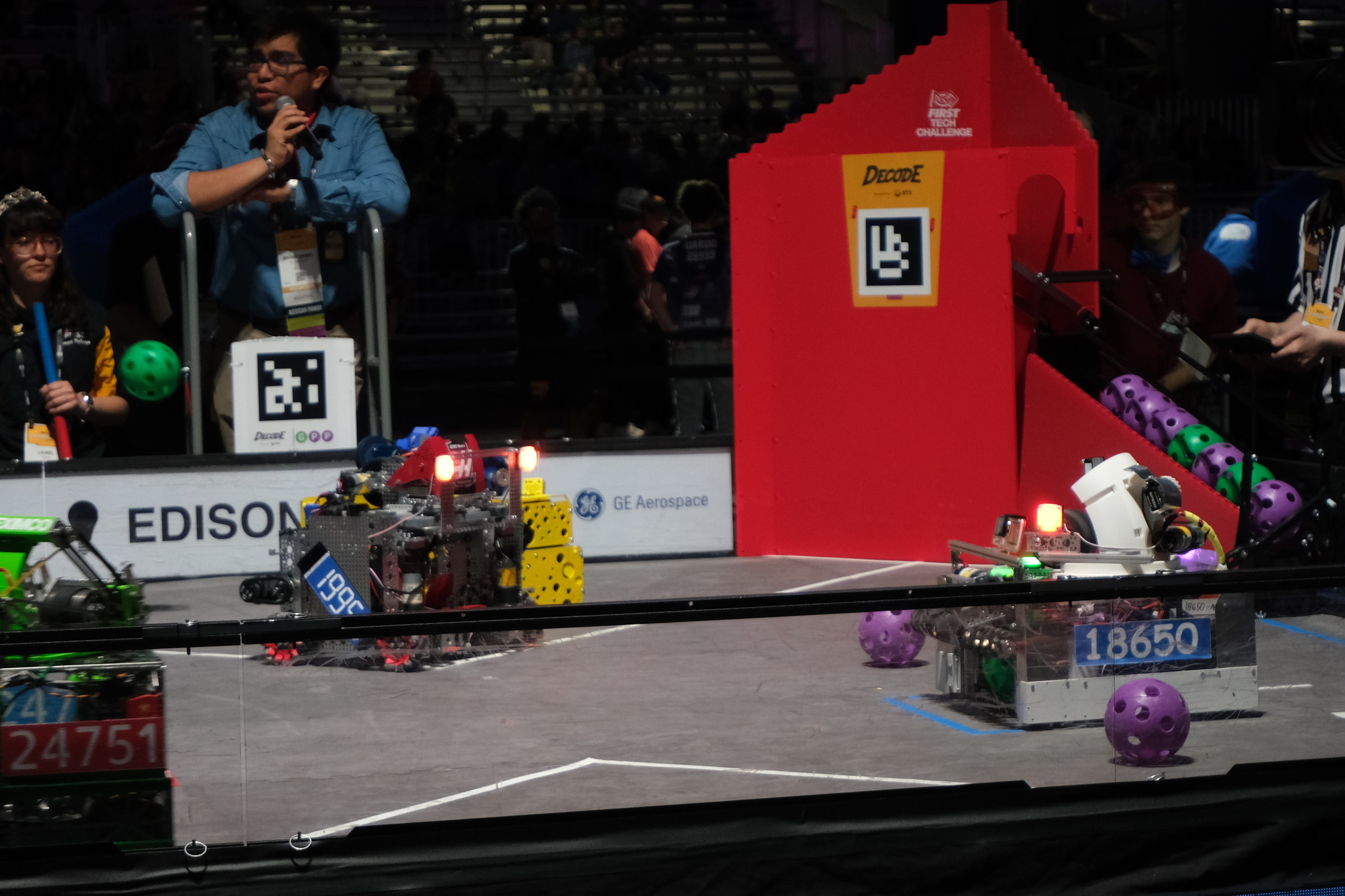
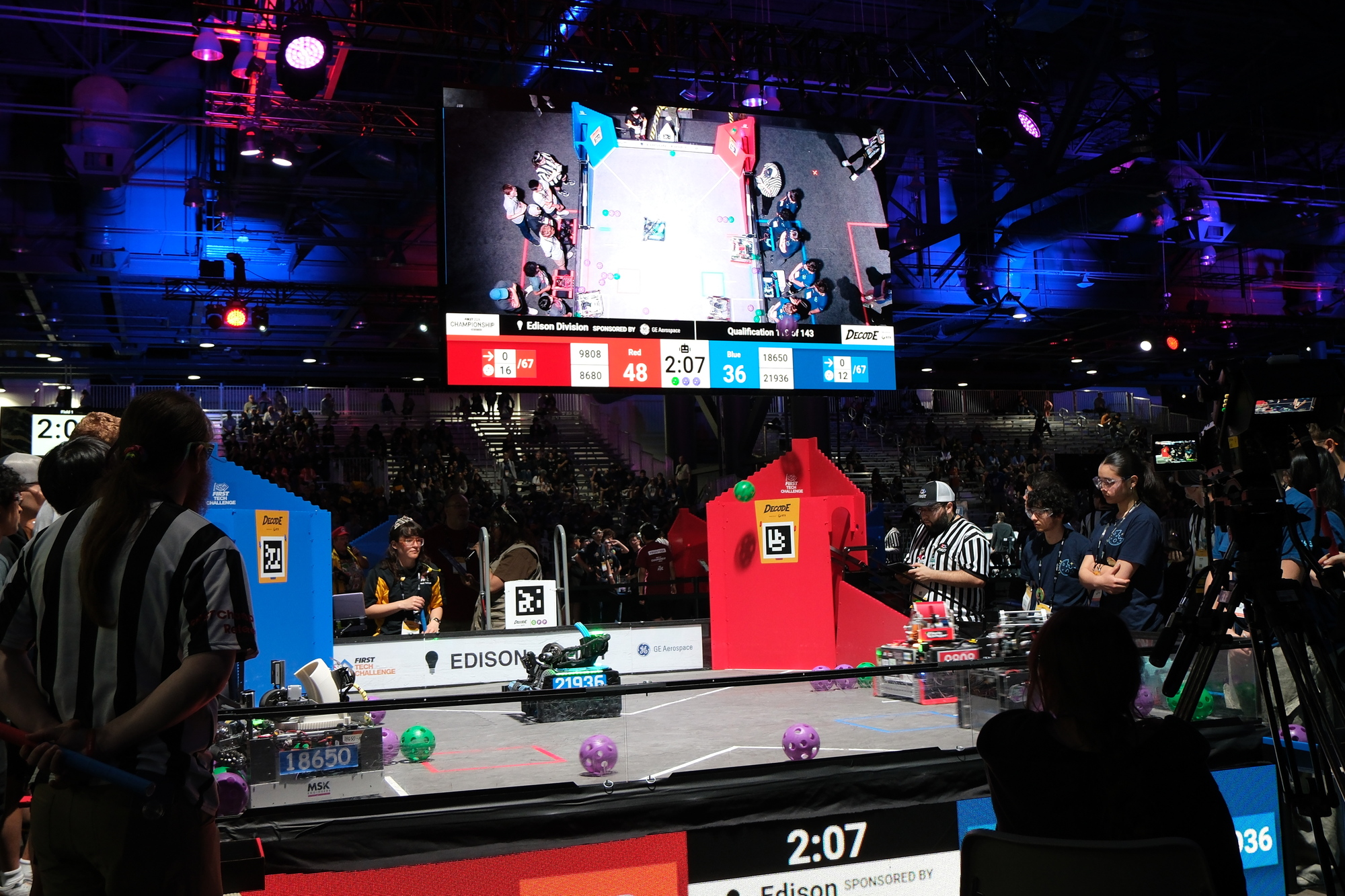
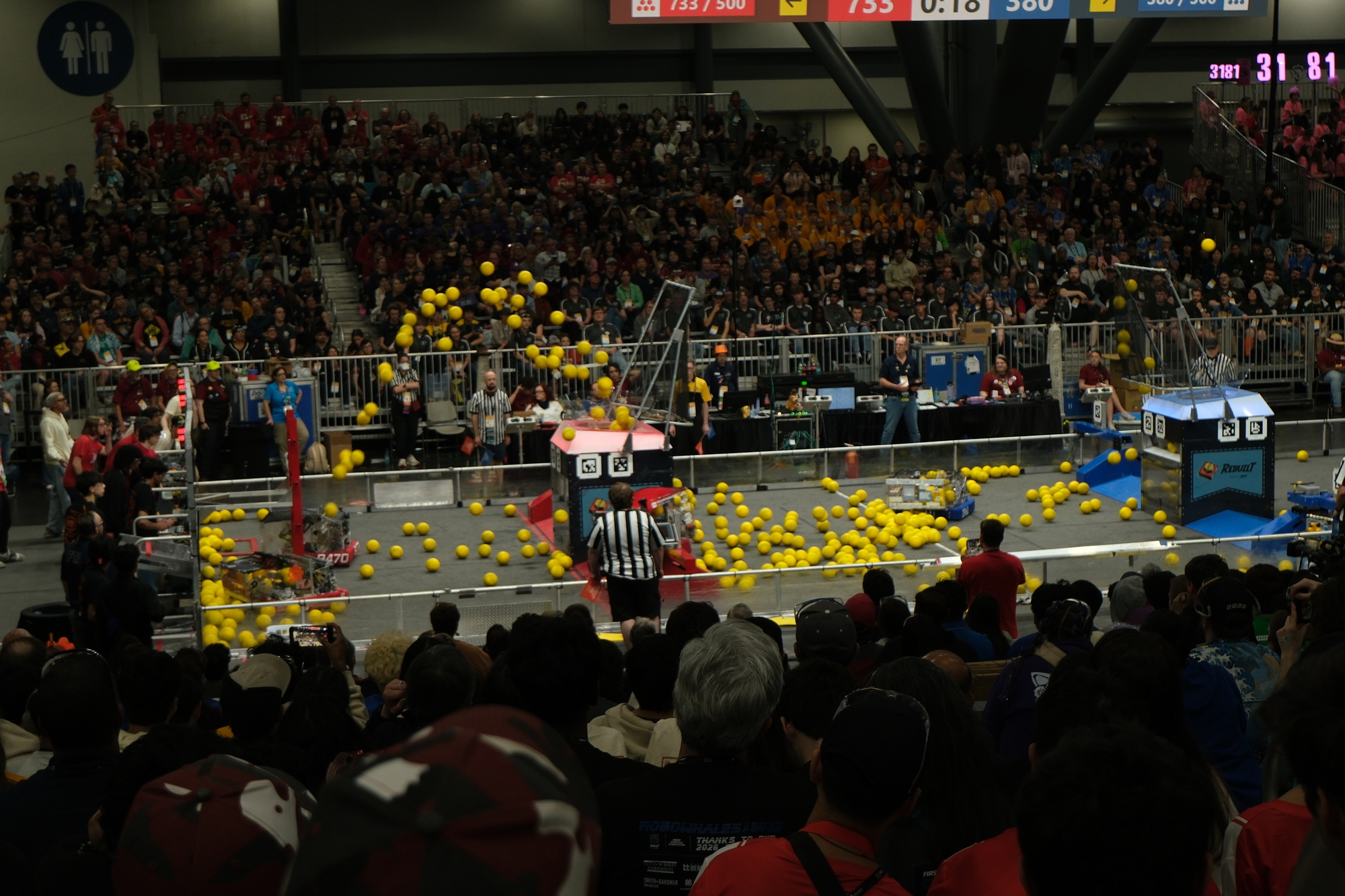
In the competition area, the standard 12’x12’ playing fields were raised about 2 feet on black platforms. New and unusual, these provided a better viewing experience for the audience. There were also huge screens with a top-down camera angle for perfect visibility onto the field. The competition area used dramatic spot lighting. This created unique light conditions on the field, and broke our robot’s vision system on Thursday until we recalibrated the next morning. We’ll pay closer attention next year, and not lose a full day to poor calibration.
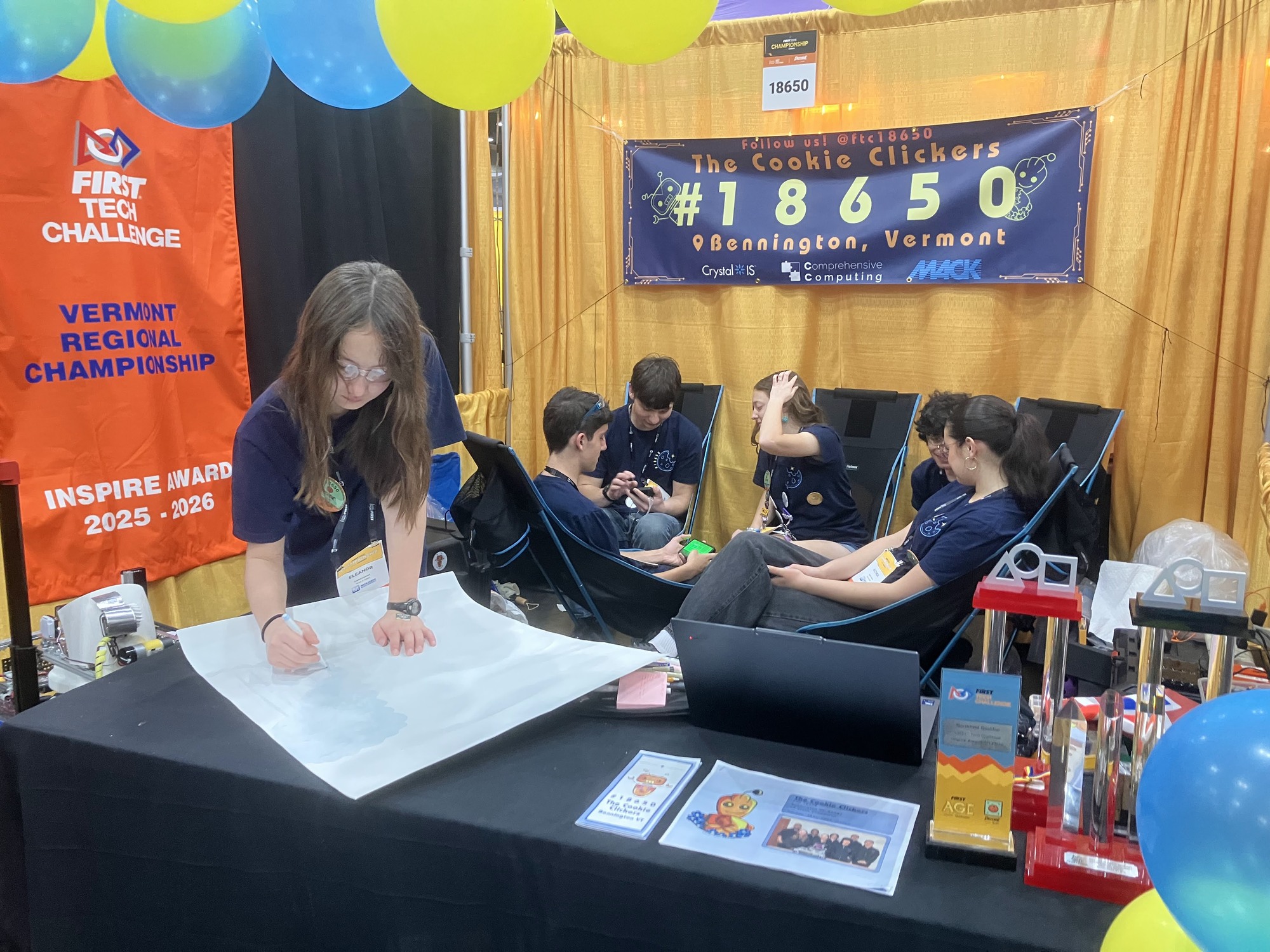
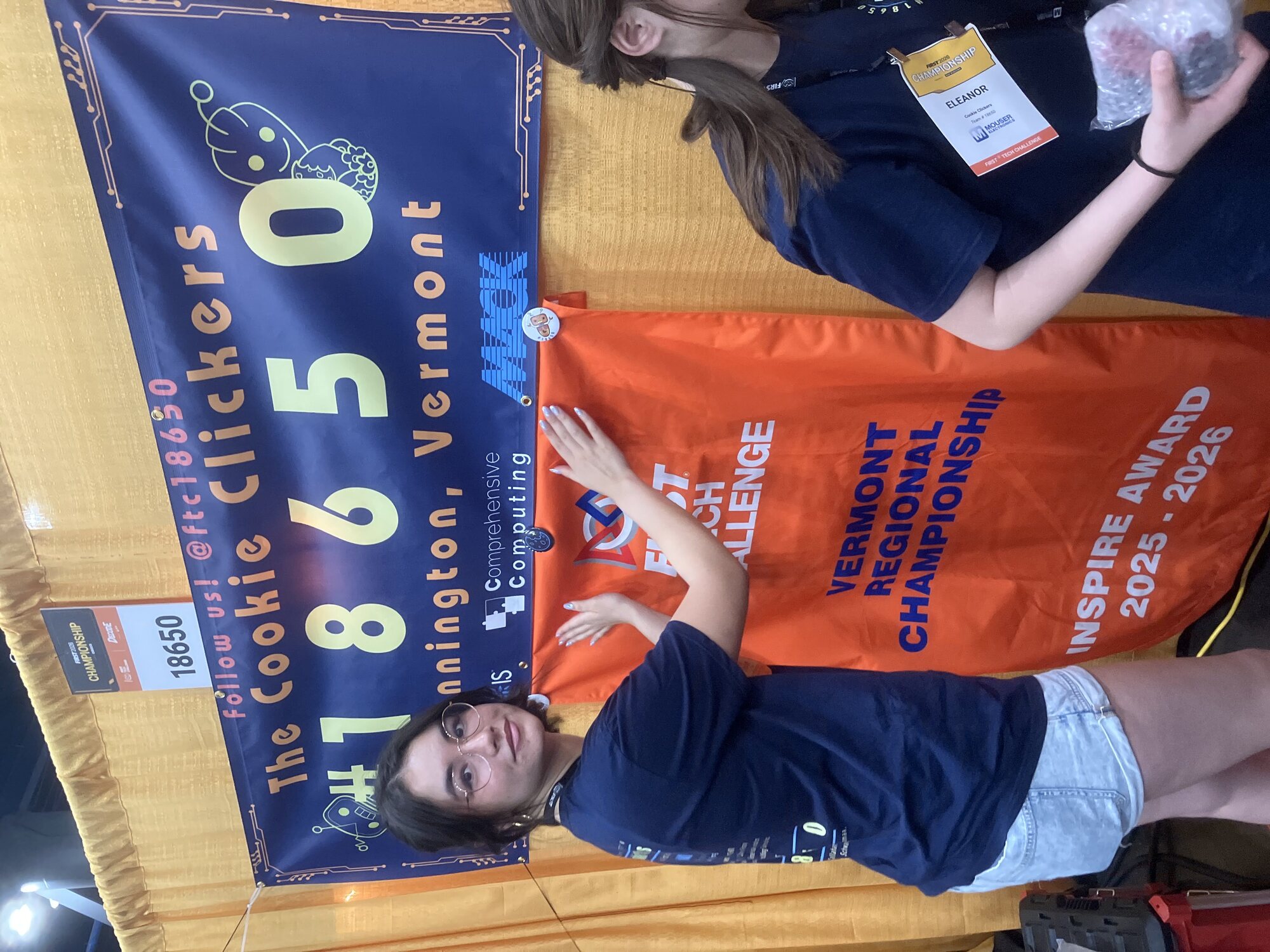
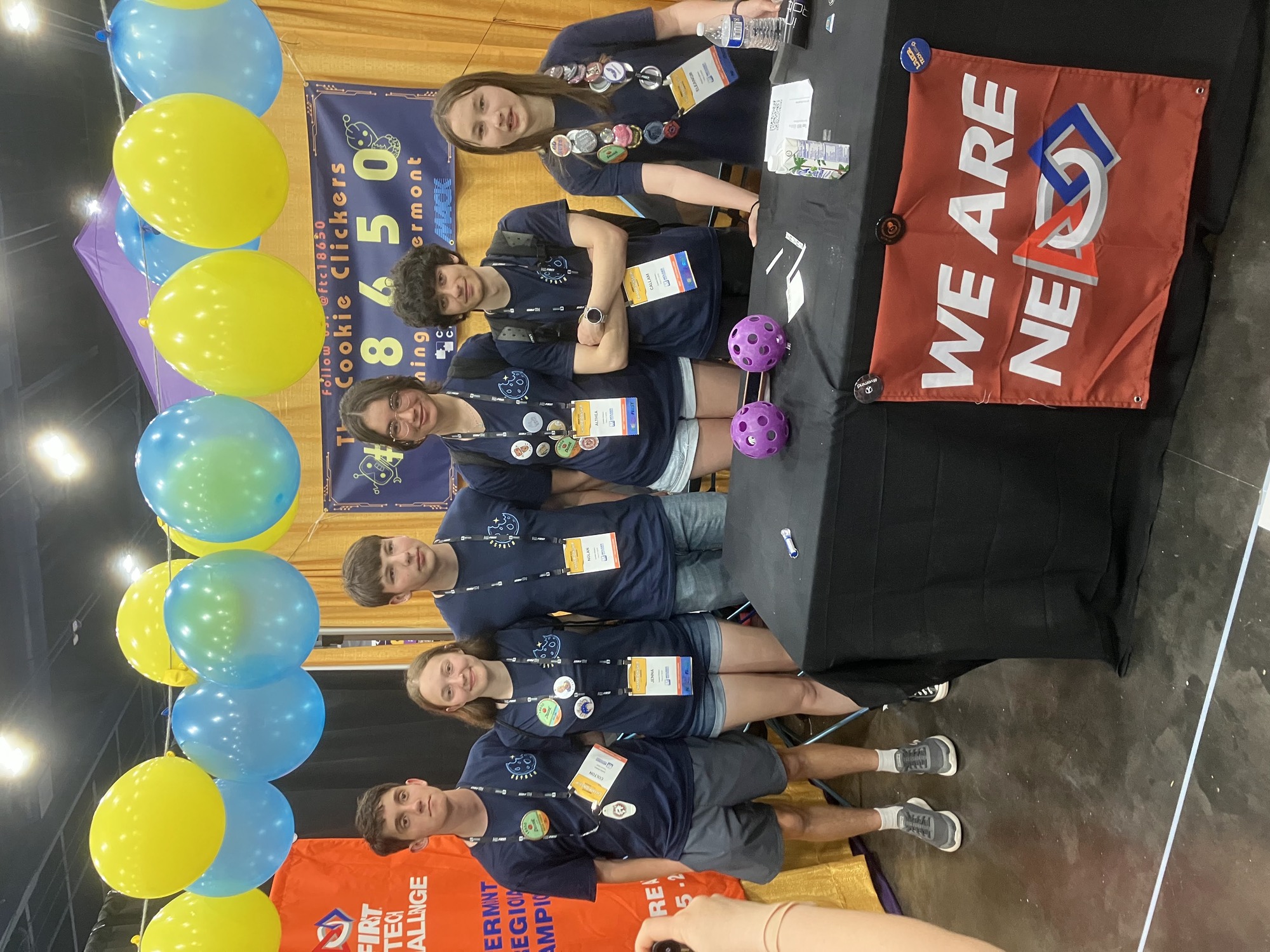
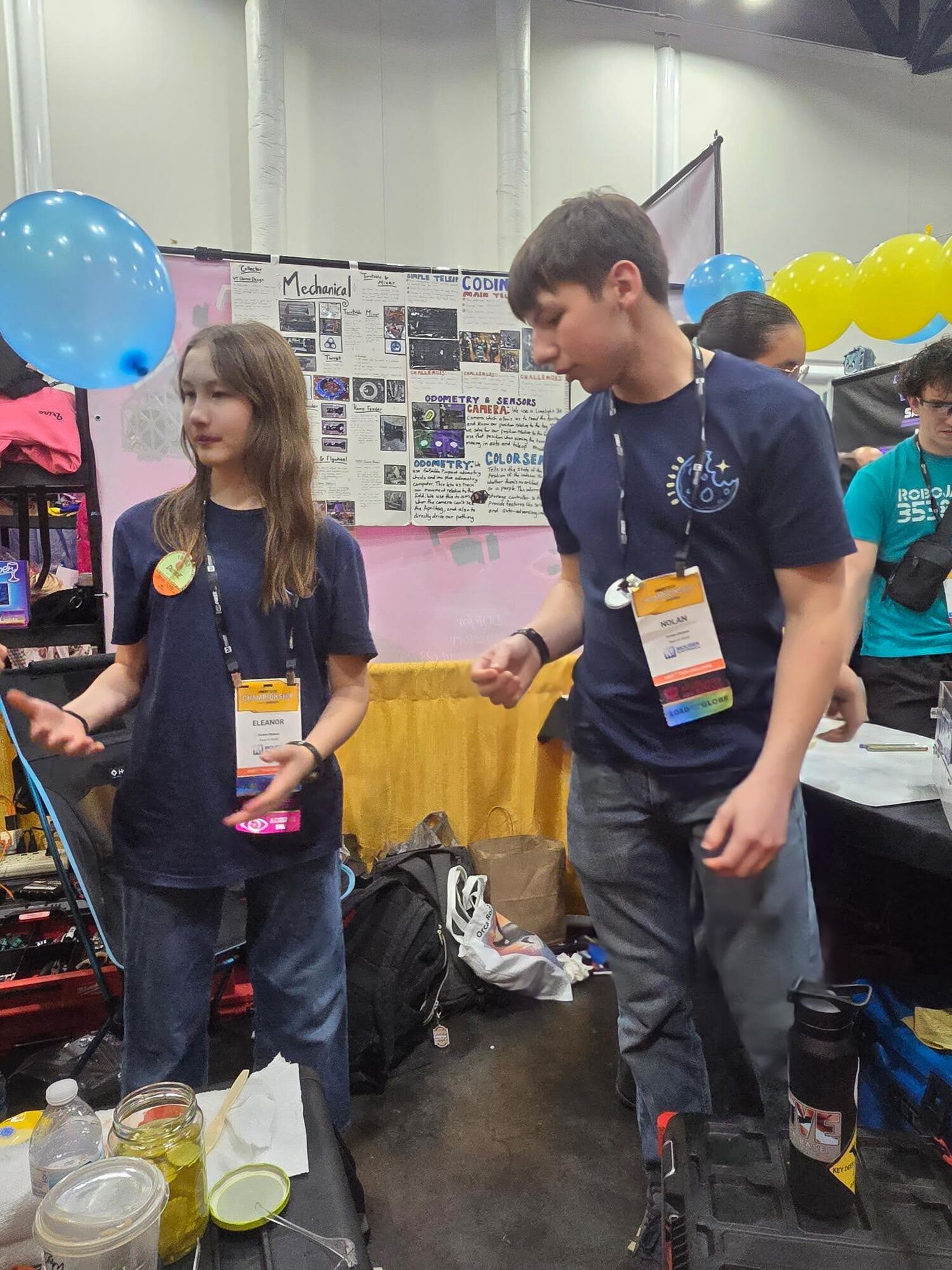
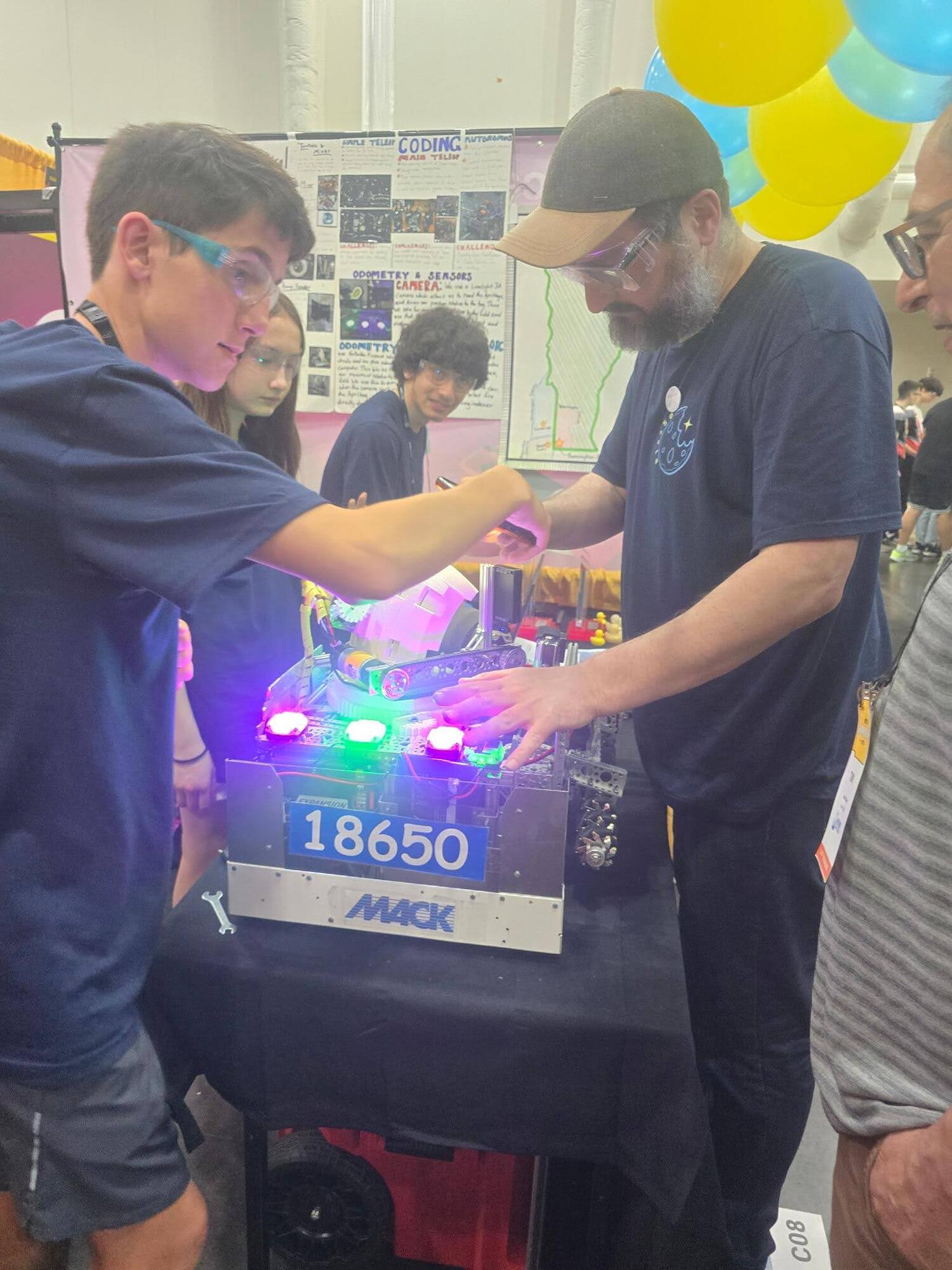
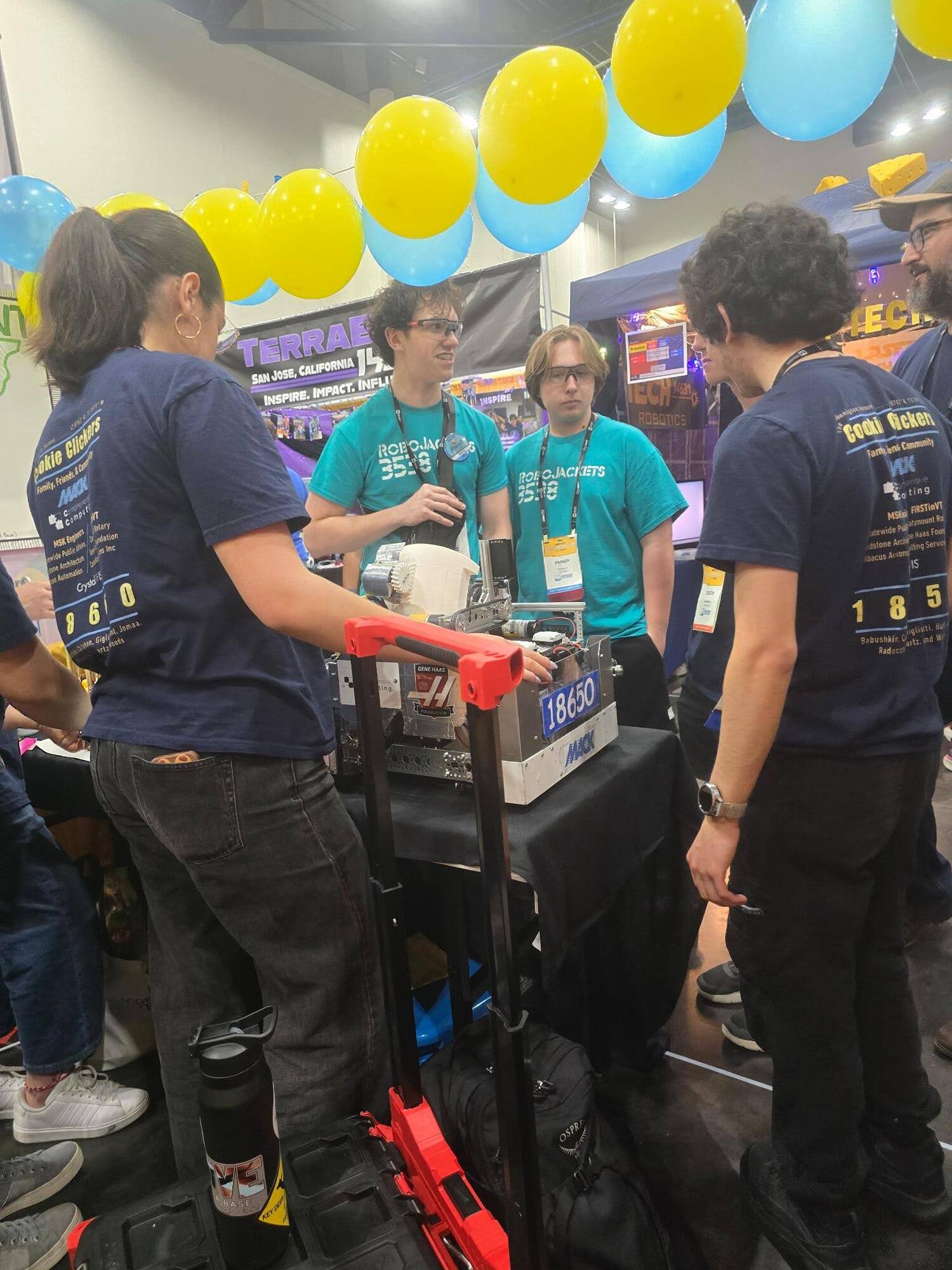
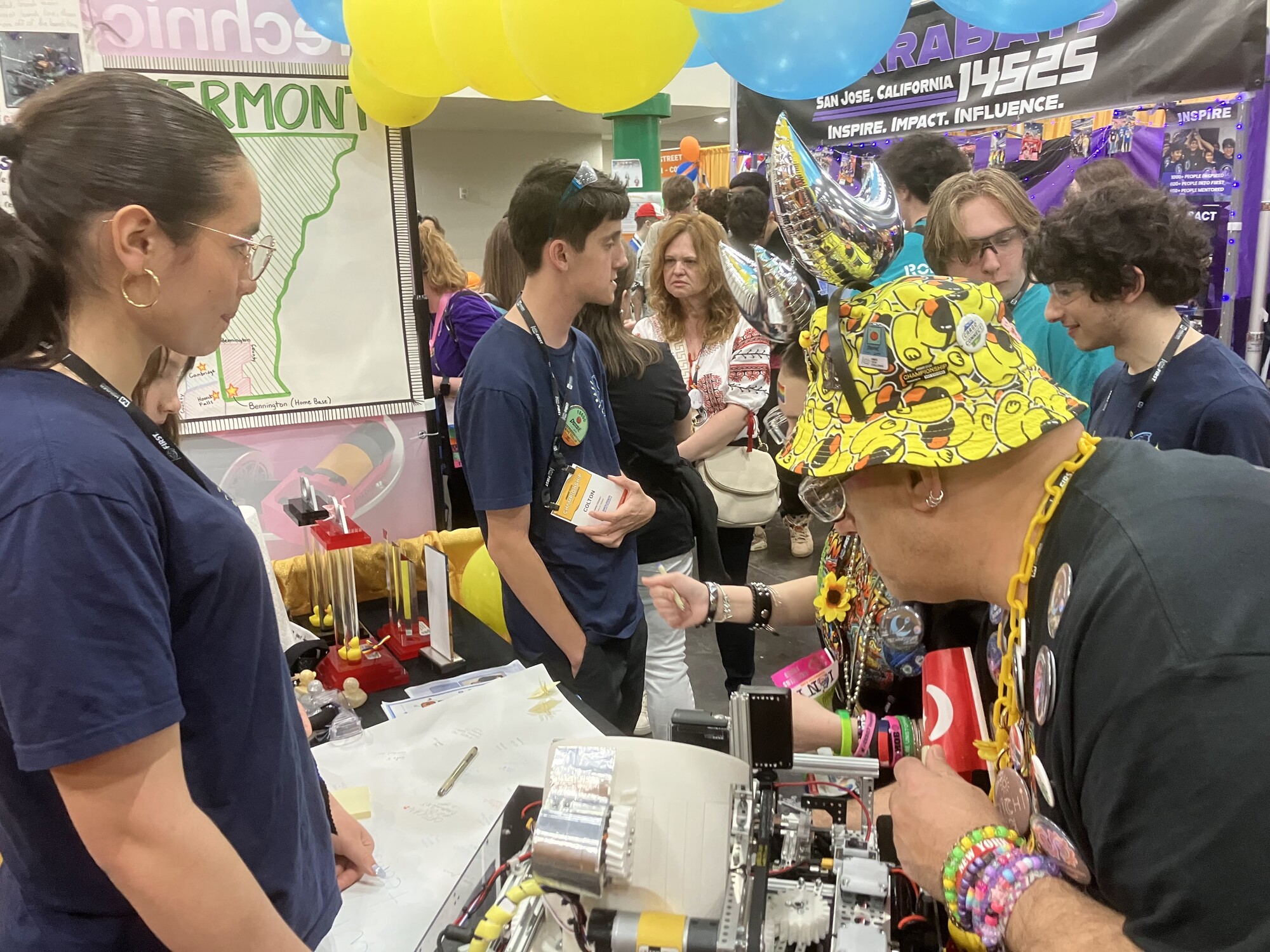
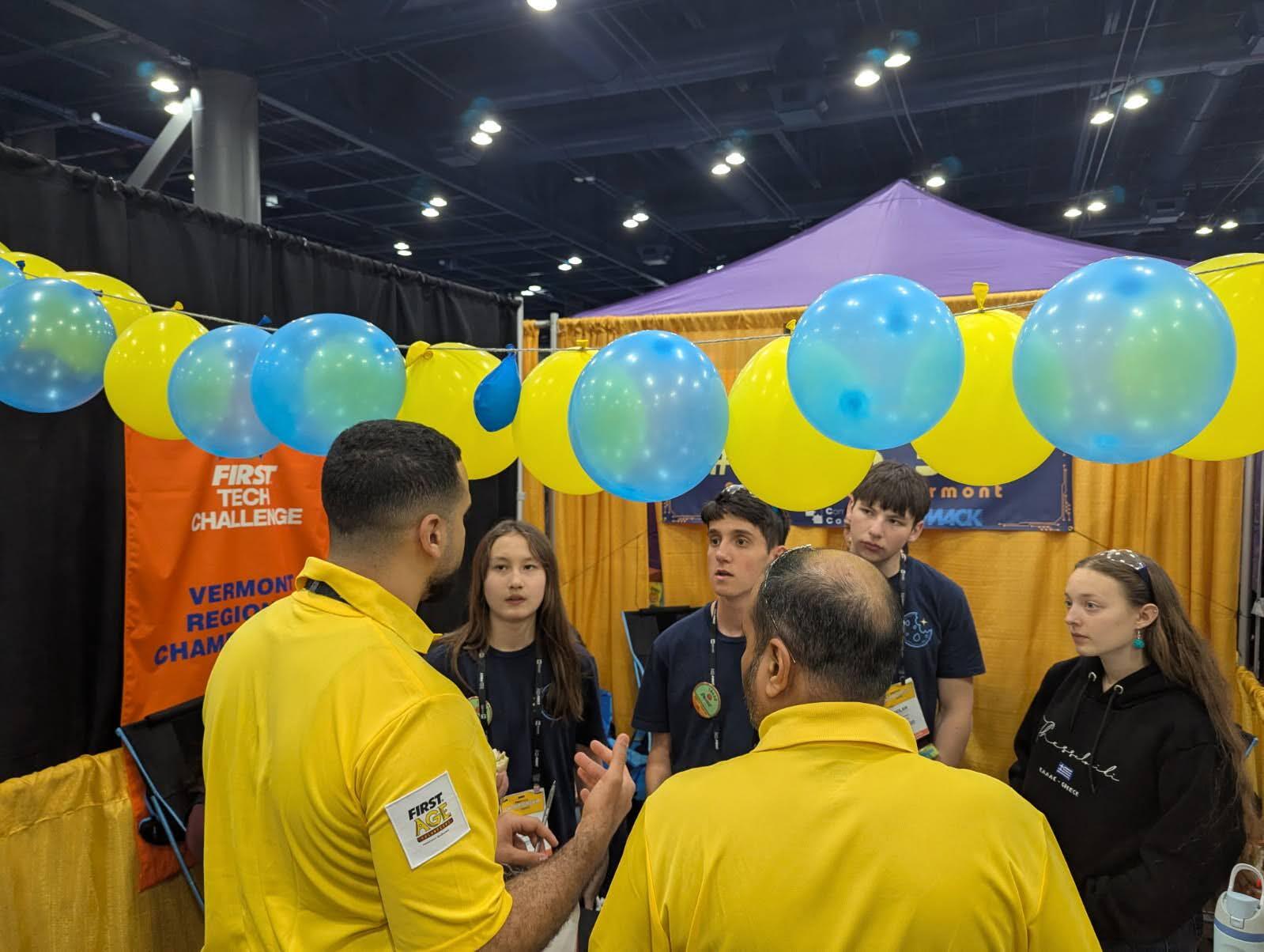
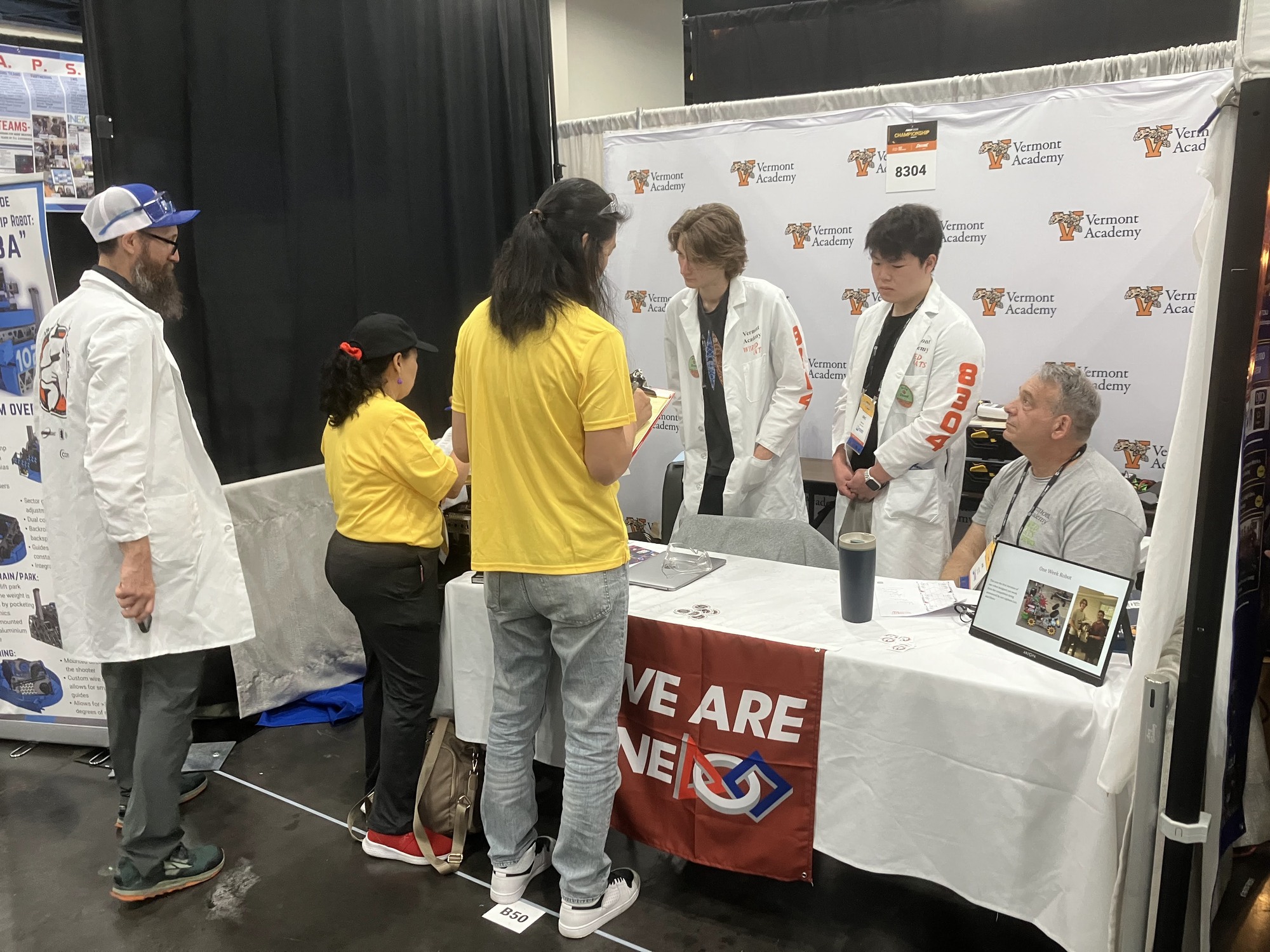
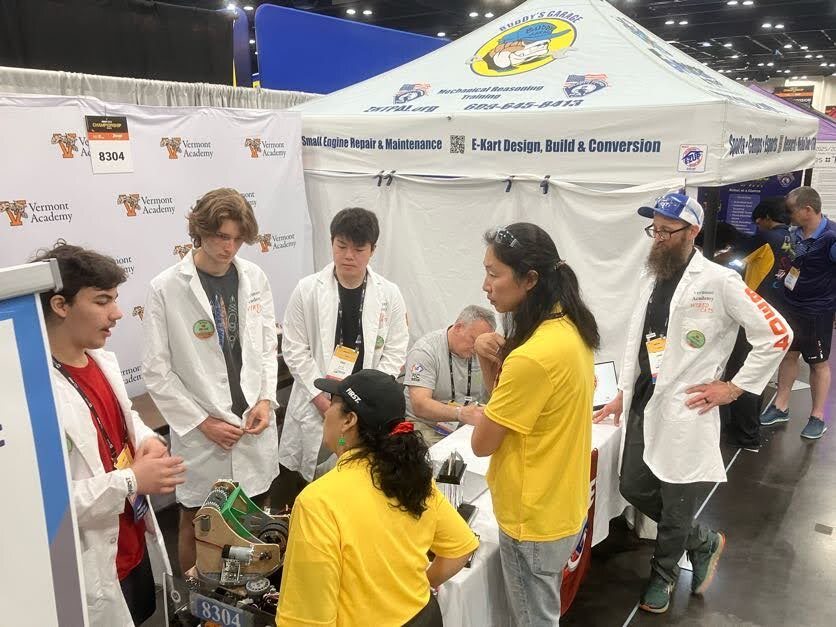
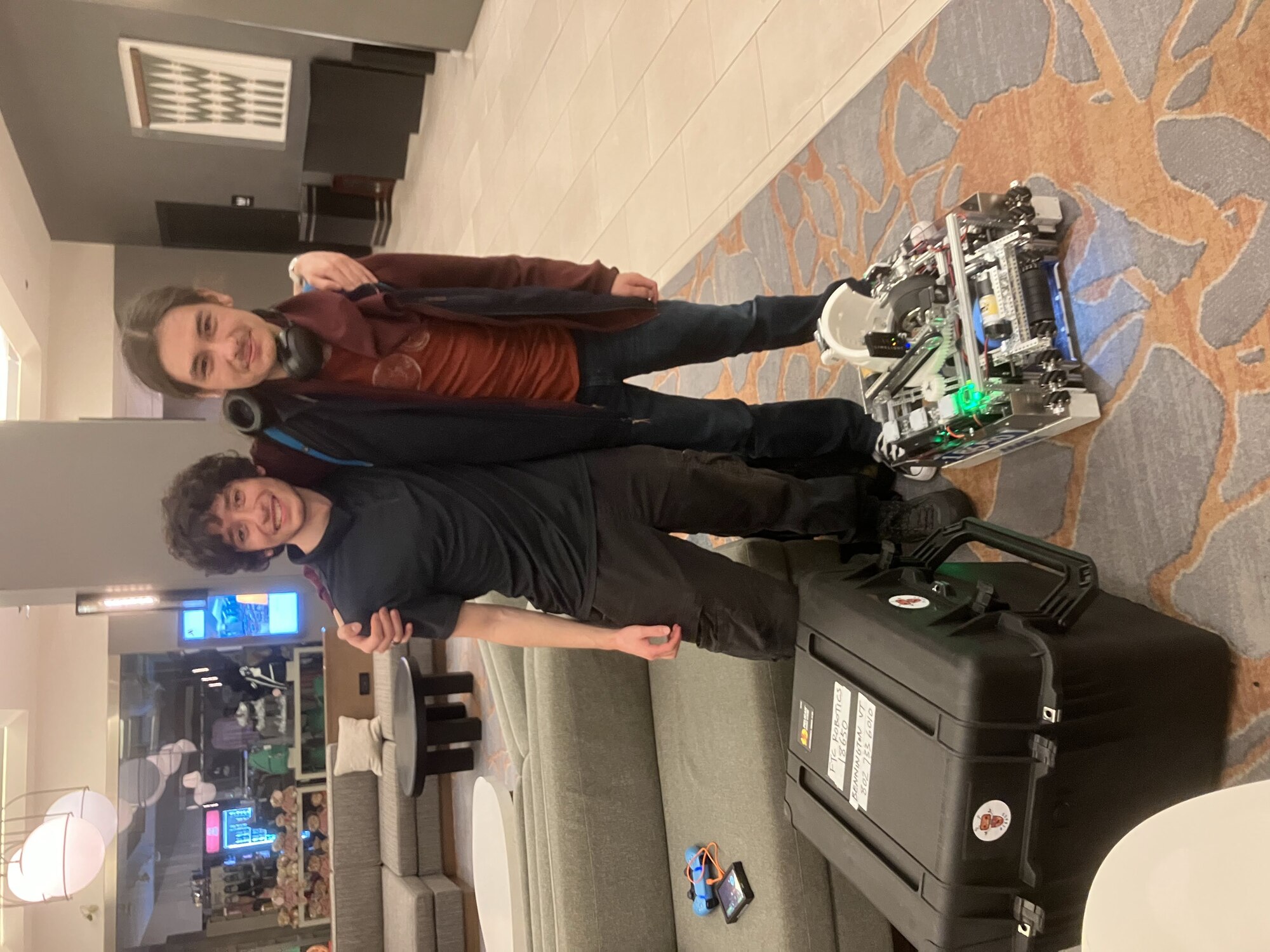
Each team had a 10’x10’ pit space of their own. Most were returning teams and well prepared with a fully outfitted space. This was our first year and we prepared the basics, including tools, team awards and a beautiful banner, but we didn’t prepare a canopy, so the cacophony of the hall was always present. We carried all our gear with us on the plane, and this limited the kind of items we could bring. Next year, we’ll ship our pit gear down separately, with one of the trucks from New England FIRST.
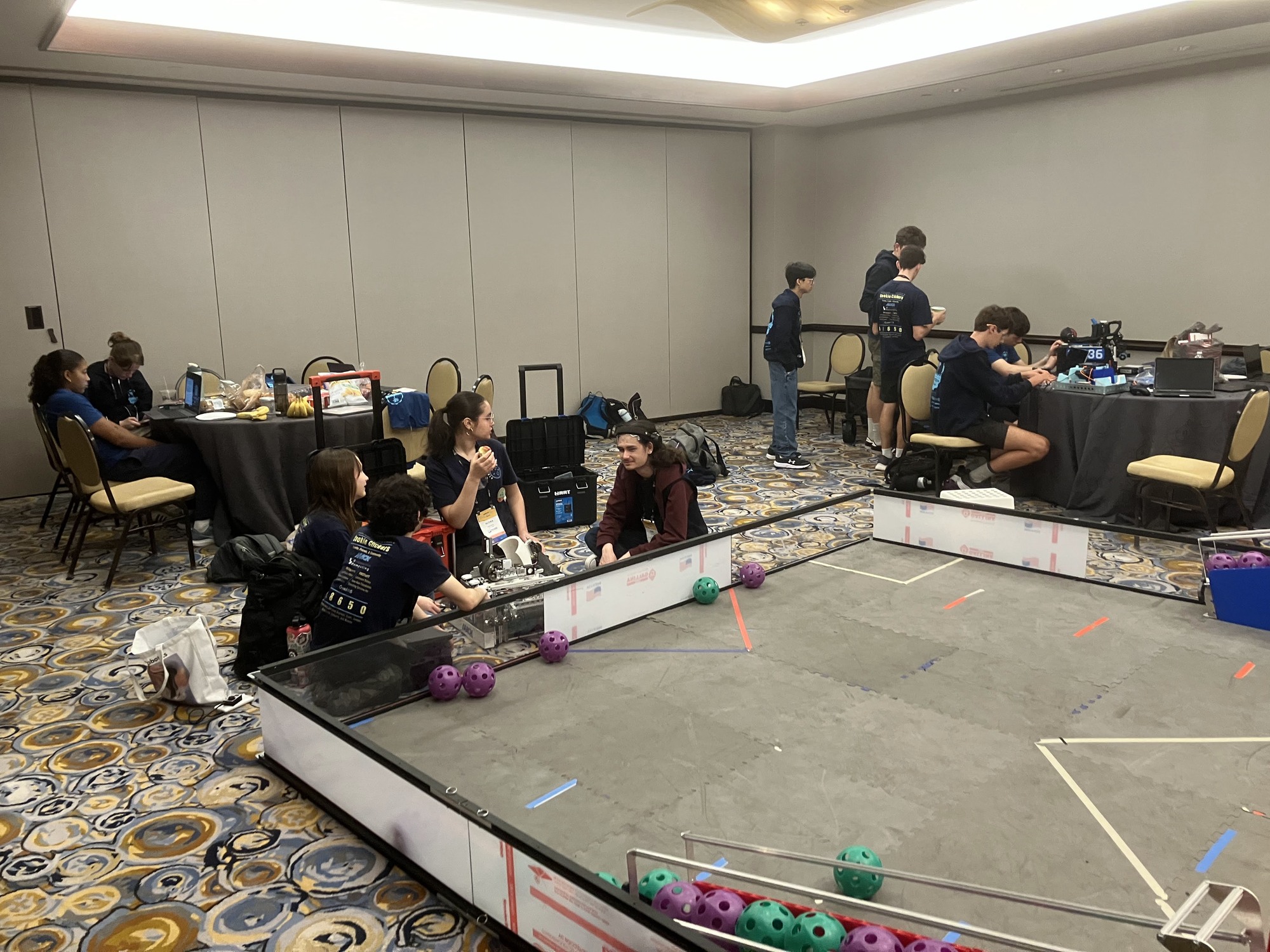
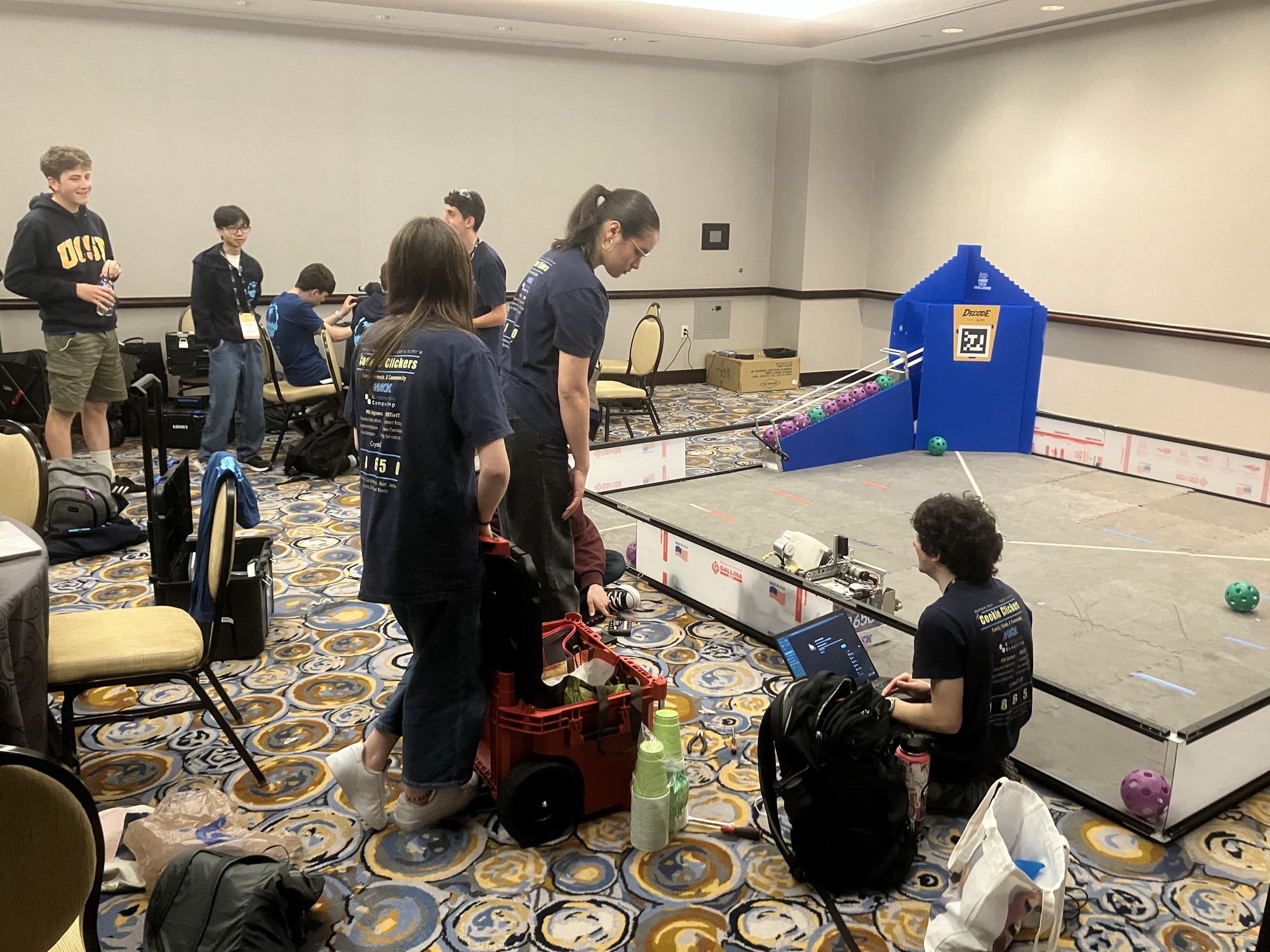
Some teams booked accommodation in the adjacent Hilton Americas-Houston hotel, some even booked a conference room to set up their own private practice field. At first glance this seemed frivolous and extravagant, but when 21936 “SamoTech” invited us to practice with them, it all made sense–their team was fresh and ready to go, they could practice throughout the day, and they always had a quiet place to recuperate and work on the robot. The days are long, and the best teams must maintain their vitality!
Redesigns and Reliability
Leading up to the Vermont Championship, we had two weeks to improve reliability after the mechanical build was complete. Our robot performed well up until the playoffs, when wear and tear from the competition began to cause malfunctions. We still won the Inspire Award–the highest judged award in FIRST–and secured advancement to Houston. Success!
Leading up to Houston, the students were more ambitious, and redesigned several subsystems to raise the ceiling on theoretical performance. They redesigned the intake system for full-width collection, and they redesigned the launch system for volley fire. They even tried redesigning the turret for 360 continuous rotation using a slip ring! The purpose of these changes was to reduce cycle time–how fast can the robot pick up artifacts from the field and shoot them into the goal? Top teams could do this in about a second. At the Vermont Championship, our robot could do it in about 5 seconds–not good enough for Worlds.
Alas, failure is the risk of ambition, and we barely got the robot ready in time to leave, with little chance to practice or improve reliability. Other teams tried big ambitious rebuilds too. Some pulled it off, some did not. High ambition, high risk!
Competition
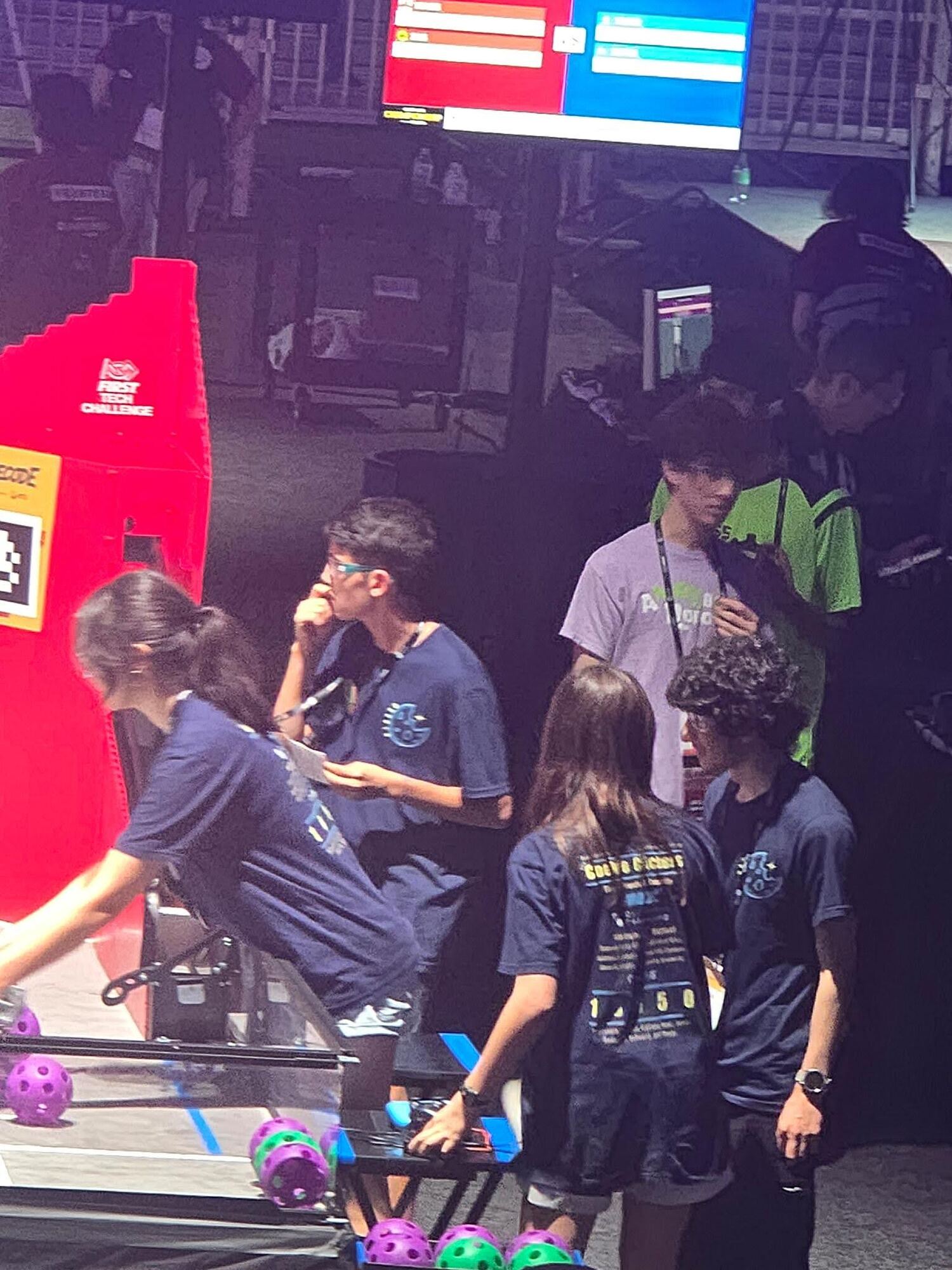
We played in Edison Division, one of six divisions, each named after an important historical scientist or inventor. Edison was the most competitive division, so we only had a few chances to win if the robot performed well. As it happened, the robot suffered repeated mishaps on Thursday and we lost all our matches. Friday was better, but not good enough, and we lost all those matches too. 0-10-0!
This was hard on student morale, but they persevered, and steadily improved throughout the championship.
8304 “Wired Cats” finished 4-6-0–not bad for their first year, and on par with Vermont’s best in prior years.
Failure as a Teacher
Failure is the great teacher, and youth robotics provides a venue for students to repeatedly fail in pursuit of a goal, to learn what does and doesn’t work, and to bring something new into the world, of their own imprint.
It would have been nice to win at least a couple matches, to testify to the possibility of success at the highest levels of competition. Failure was partly my fault as head coach, for not putting up stronger guardrails and providing better guidance, and partly the fault of students, for not tempering their ambitions against the constraints of time and reliability.
That said, even getting to Houston was a singular accomplishment. I admire our students’ stubborn fixation on visions of excellence, and their strenuous efforts to bring them to fruition. Attending FIRST Championship was always a reach goal. Congratulations, you reached it! May we do better next time.
Post-Competition
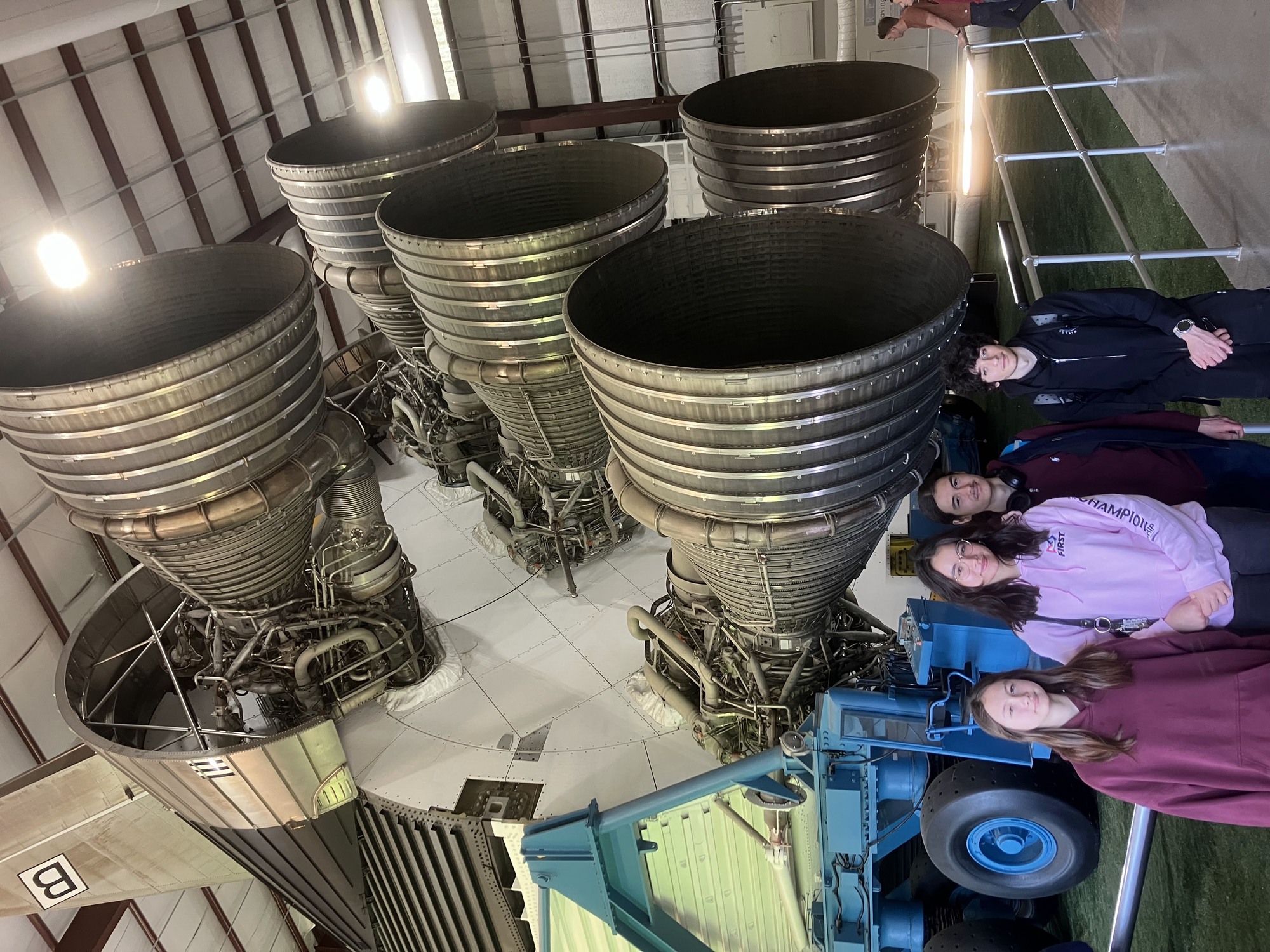
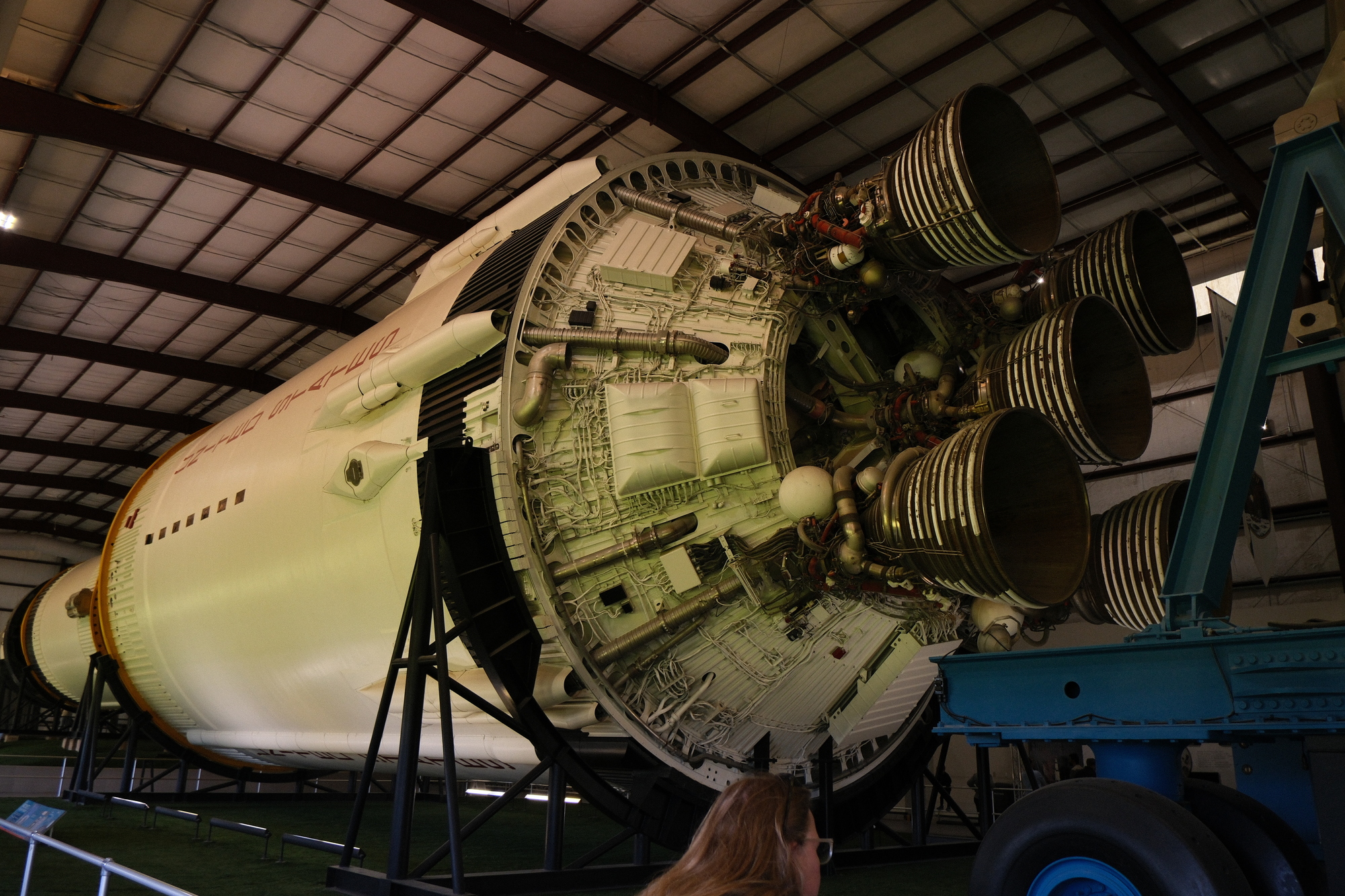
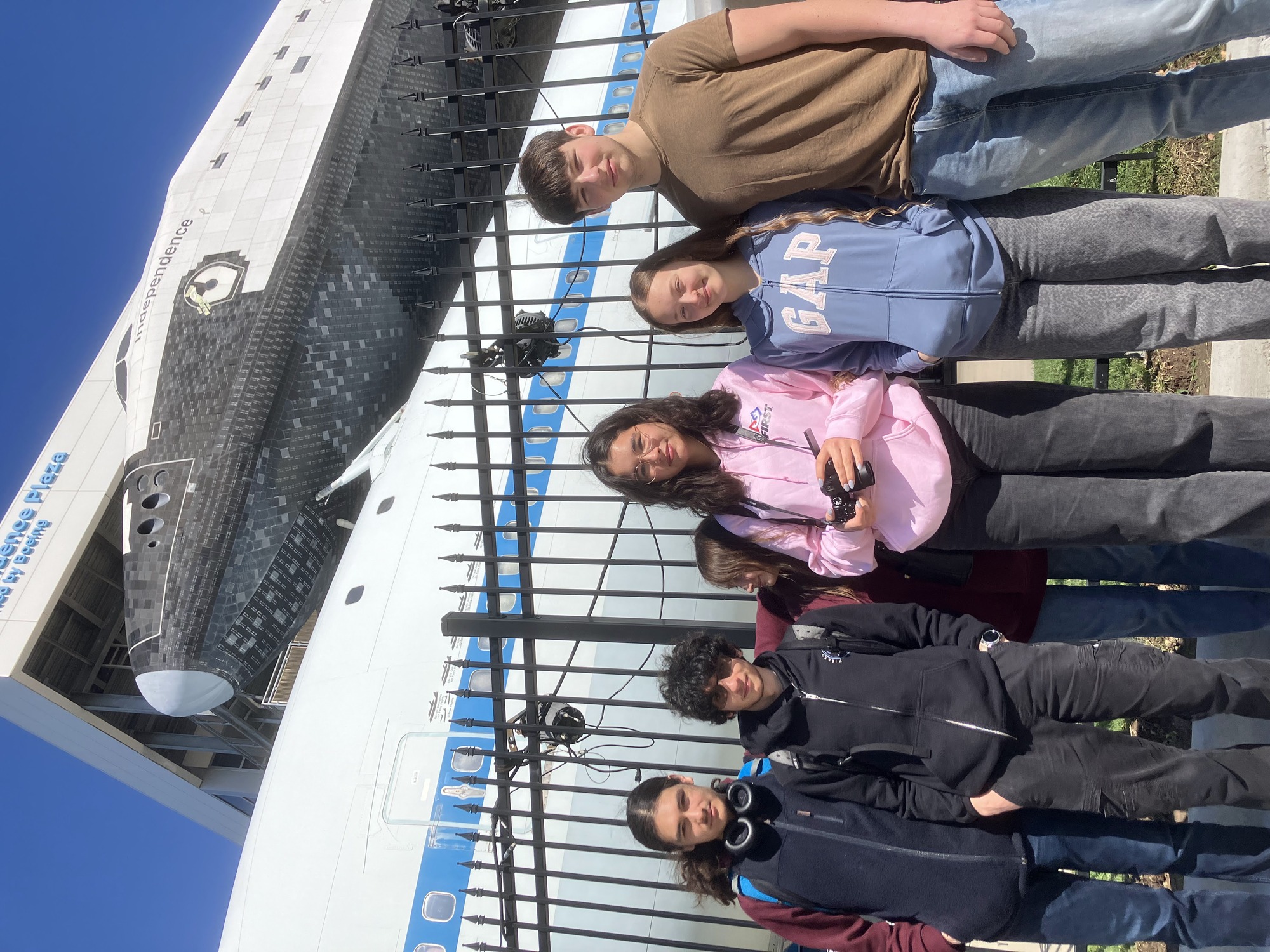
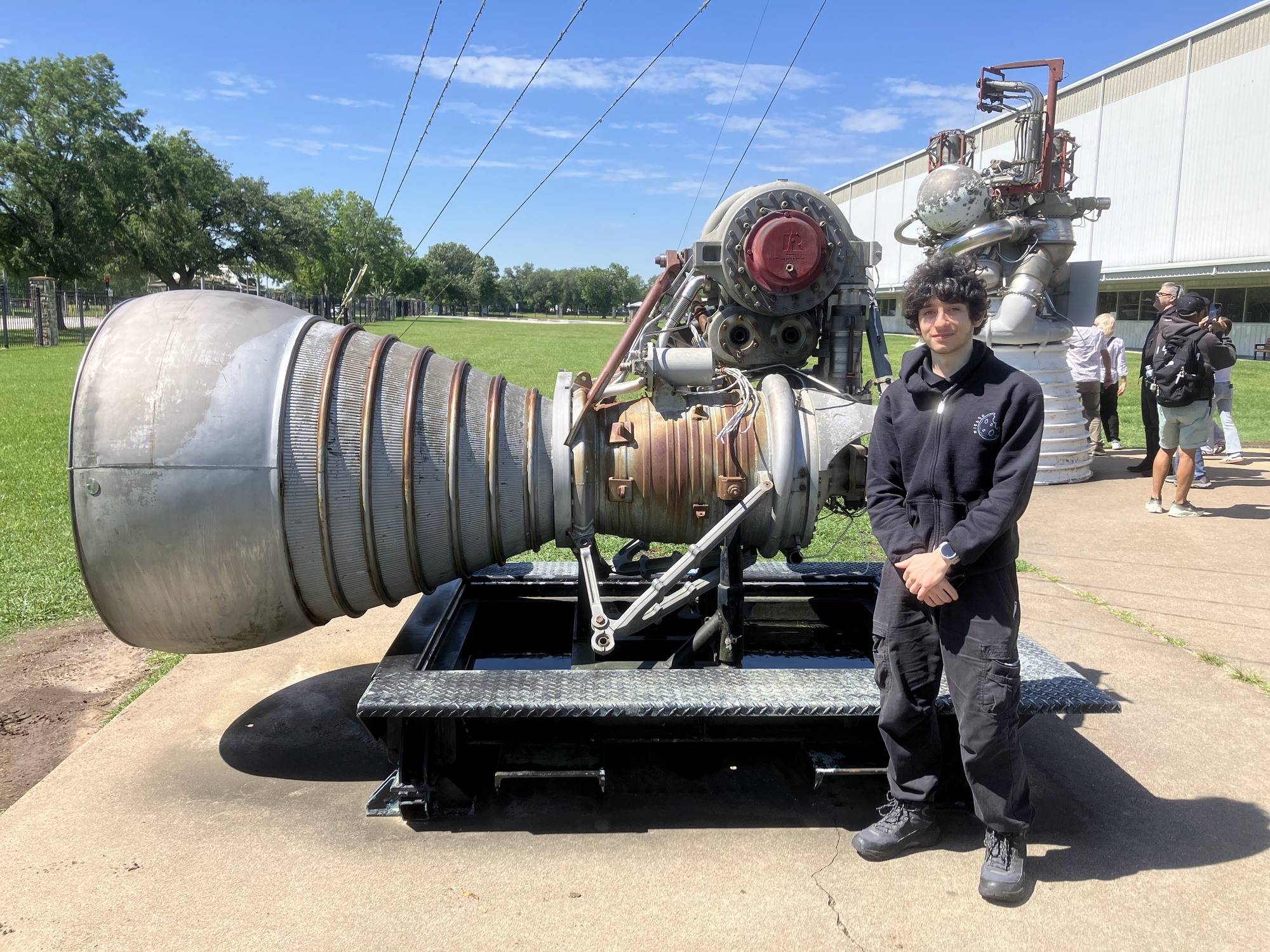
By Friday it was clear we wouldn’t make the division playoffs, and most students wanted a break, so we headed out to Space Center Houston on Saturday to check out the exhibits, including the incredible Saturn V rocket. Other teams had the same idea, and we chatted with one outside the gift shop, both teams nursing their wounds.
It’s easy to feel disappointed with your own performance, going from a top team at Regionals to middling-or-worse at Worlds. For graduating seniors it is both glorious to reach Worlds, and bittersweet to be crushed by the intense competition. For juniors and below, partial success provides a reach goal for next year.
Given the level of competition, we should continue to distinguish ourselves across many fronts. Some students are motivated by winning, others by building and connection. We want to capture all the energy and make the program work for many different dispositions.
Student Reflections
During our first time attending the FIRST Championship our team was able to learn greatly through collaborating and competing with other teams. While there we saw teams using many different strategies and techniques we had never heard of to compete in the same challenge we did. Even more importantly, we were able to meet and learn from teams from all around the world about both how they design, build, and test, and also how they operate as a team and as individuals.
Bolts and Biscuits
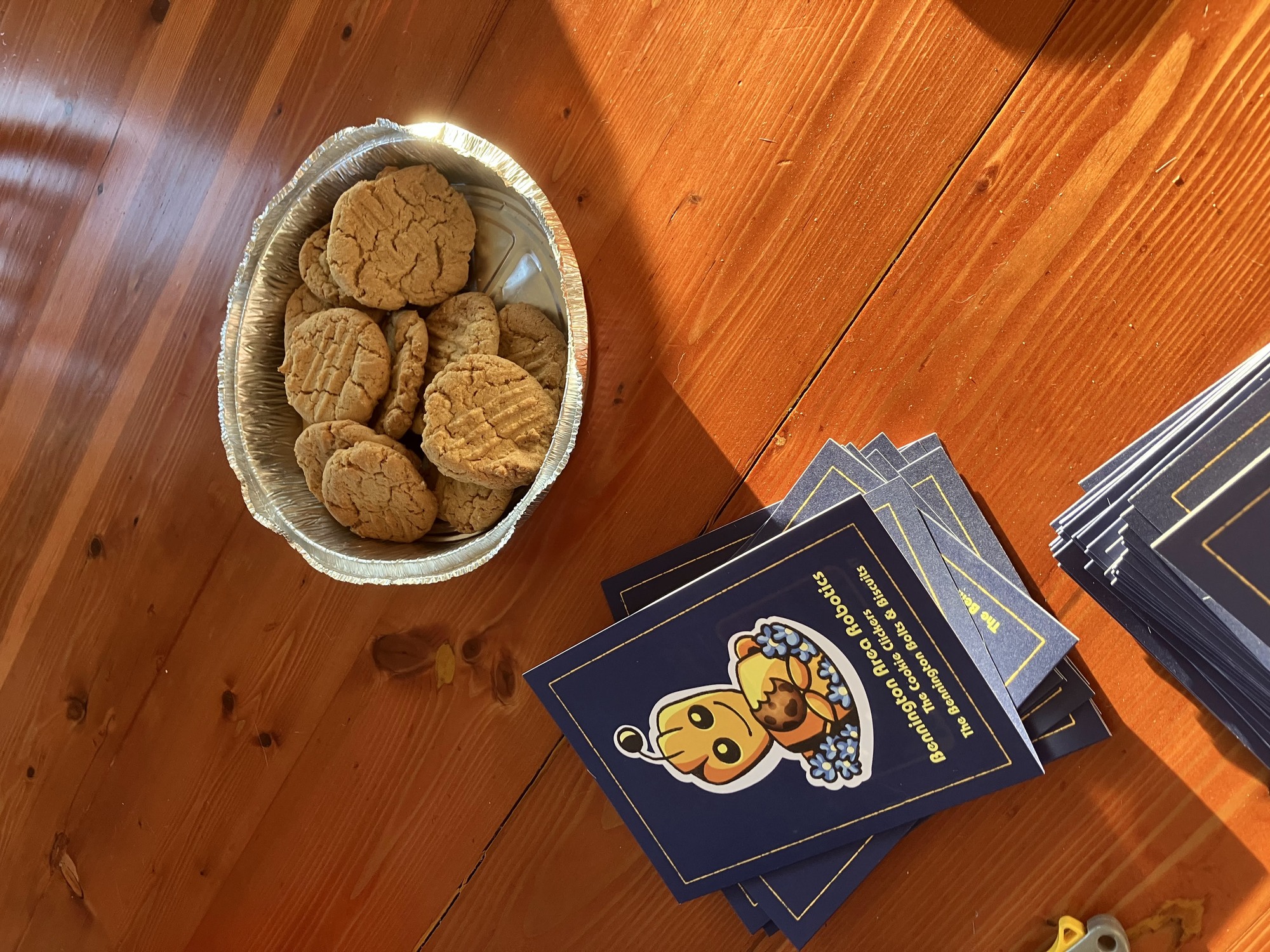
Two weeks before we flew to Houston, sister team 32473 “Bennington Bolts and Biscuits” played out their own post-season at the New England Premier Event, held April 17-18 in West Springfield, MA at the Big E. As a rookie they were never likely to advance out of Vermont. And yet advance they did, through disciplined work and standout shooting all season long.
They would have ranked even higher at Vermont had they remembered their Engineering Portfolio for judging. Their portfolio was written, printed, and ready–and then forgotten. A rookie mistake? Let’s hope so!
Premier events are final competitions for teams that did well at their regional championship but did not qualify for Worlds; for a first-year team to advance is quite something. At West Springfield, they won 2 matches and lost 8–not bad!
It was a strong season, and their first one. May they have many more good seasons to come!
Off-Season
We’ll be meeting over the summer, getting ready for BIOBUZZ, the competition for next year. We don’t have the full details yet, but based on practice exercises, the game appears to involve collecting small 3” pickleballs, aka “pollen”, navigating around obstacles, and delivering the pollen to some destination.
I have already heard talk of “swerve drives,” an exotic style of drive base, more challenging to build and control than a regular drive base with mecanum wheels. And why not? Robotics should be fun and interesting, and competition should help focus the mind, but not preclude enjoyment.
Technically, Bolts and Biscuits wants to improve localization through odometry, which opens the door to absolute control of the drive base in the style of FRC, for smooth and efficient driving.
Notes for Next Year’s Team
-
Impose a hard deadline 2 weeks before the competition for the build to be complete, to provide adequate time for testing and refinement. We over-indexed on our track record of pulling off heroic builds, and then failed to pull it off. As head coach, I was preoccupied with fundraising and logistics, and may have missed key moments to keep things on course. Leave a buffer!
-
Manage scope! Implementation risk scales with the number of connections between subsystems, not the number of subsystems themselves. Redesign enough of the robot and implementation risk grows quadratically.
-
Gang up actuators by design. Most teams ganged two motors on their flywheel (we used one). SamoTech ganged 3 continuous servos on their turret (we used a motor). Motors are limited to 8 in FTC, while servos are only limited by the ports on the computer. Thus, motors are more precious than servos, and continuous servos can be ganged up to substitute for a motor.
-
Send down canopy, banner, table cloth, chairs, and AV cart on the truck with New England FIRST. We were limited by what we could carry on the plane (robot, tool boxes, banner and awards), and what Houston friends could lend us (chairs, table cloth, a string of balloons).
-
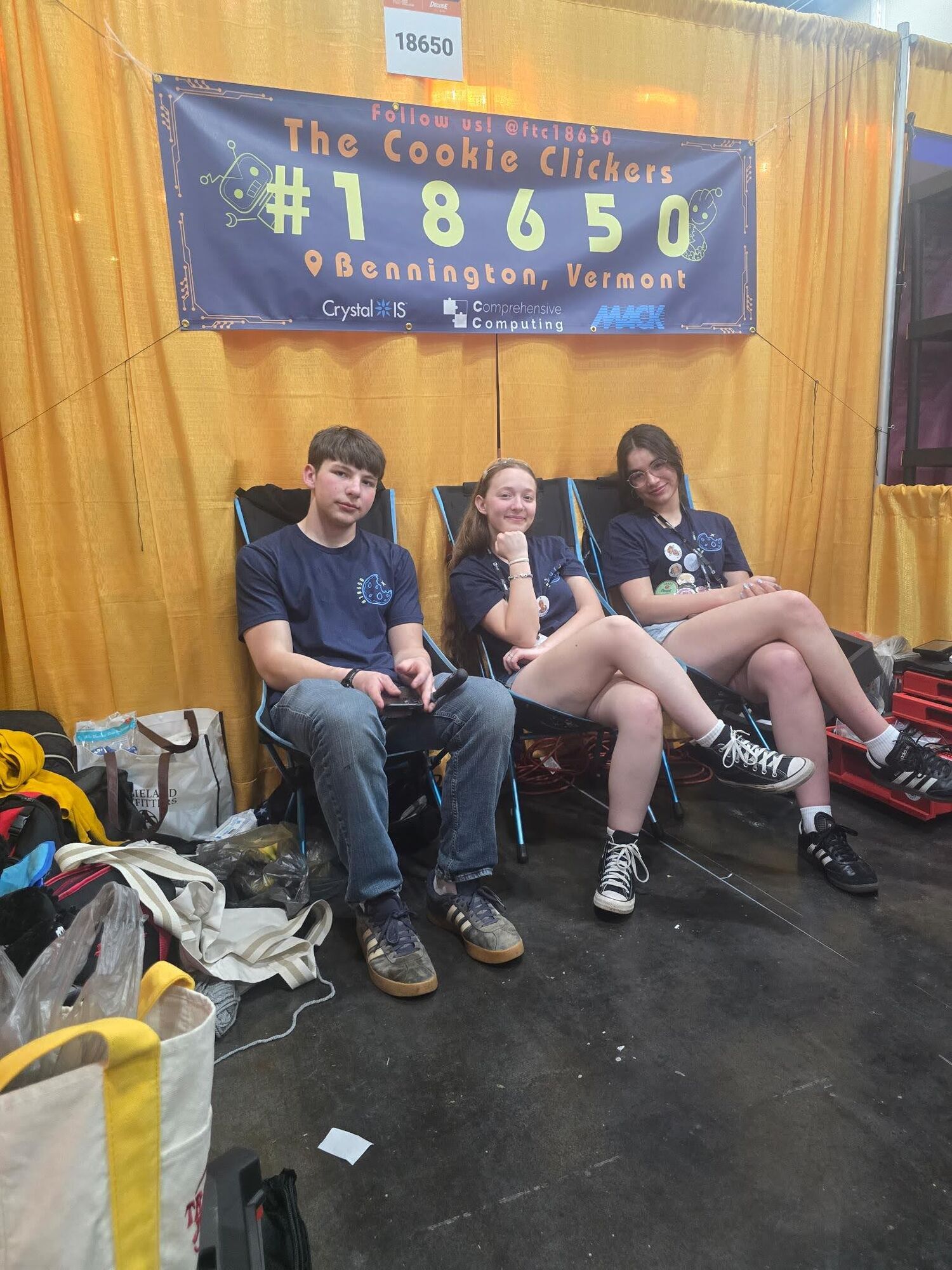
Provide a contained space for the team to rest and work between matches, either with a canopy or conference room.
-
Plan out breakfast lunch and dinner before the trip. Always have a plan for food.
-
Use seniority to resolve conflicts when assent fails.
Travel and Gear Notes
A few gear and travel choices worked out well, and bear mentioning for other teams making the trip:
-
The robot travelled in a Pelican 0350 case, on the recommendation of Clay Nicholson of CVU Robohawks. It protected the robot through baggage handling and checked without trouble. Technically oversized, our airline only charged us for being overweight.
-
Tools and parts travelled in Milwaukee Packouts as checked luggage–a wheeled base and two sets of drawers. The wheeled base then doubled as a robot cart at the event.
-
The large team banner was excellent and anchored our pit. The handmade posters were not as strong; next year, invest in more printed signage.
-
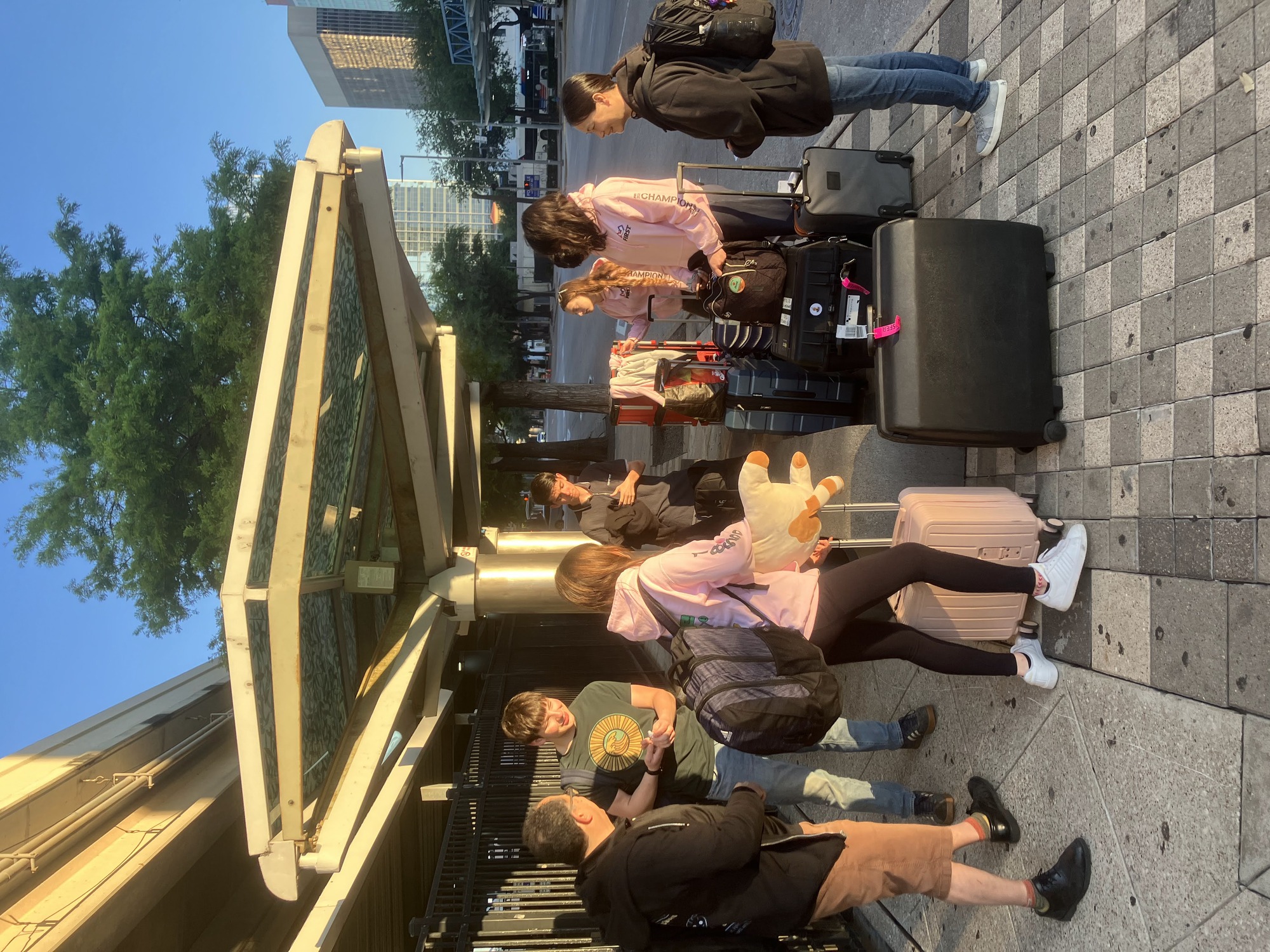
METRO passes worked out fine. The Red Line got us to and from the venue in about 30 minutes, and we only got caught out in the rain once. I dreaded renting a transit van, and maybe the dread was misplaced, hard to say. The same METRO pass got us to the airport on Sunday morning, for the cost of the finding the bus stop.
Donors
52 donors contributed to Bennington Area Robotics this year. Incredible!
For the regular season, we collected $8,657.31 in donations. This paid to stand up a new team, with all the parts and controls they needed, plus a 3D printer, robot parts, vision system, sensors, registration fees, uniforms, and everything else it takes to run two teams from kick-off to regional competition.
For the post-season, we received over $27,000 in donations between March 7 and April 28. This paid for airfare, lodging, travel gear, registration fees, robot parts, team banners, uniforms, and more, with some left over for the next year. It’s hard to believe, but I’ve checked the math–thank you for putting your confidence in us!
The majority of donors were grandparents, aunts and uncles, neighbors and alumni who sent fifty, a hundred, even five hundred dollars. Together these added up to a hotel room, parts for the robot, registration for the week.
At the same time, the top 5 donors anchored the trip with over $16,000 combined.
Your support helped turn the shock of advancement into the blessing of attendance. There is no substitute for the direct experience of excellence at the highest levels. Our students have now seen this with their own eyes. They carry clear images of what is possible, knowledge of their own accomplishments, and appreciation of the distances before them.
These events were exciting, stimulating, humbling, and hard, and made possible by your generosity. This is a wonderful thing to provide young people in their formative years. Thank you!
Last updated